Seitenbereiche:
  • zum Inhalt [Alt+0]
  • zum Hauptmenü [Alt+1]

  • KULTURZENTRUM
    • Über uns
  • Aktuelles/Termine
    • Presse/Newsletter
  • Publikationen
    • Ausstellungsmagazine
    • Ausstellungskataloge
    • Bücher
  • Lehre
    • Liturgie und Kunst im Kontext spätmodener Gesellschaft
    • DisAbility
    • Gender&Queer
    • Kunst im Krieg
    • Iconic Turn
    • Was inspiriert Künstler*innen heute an der Figur Jesu?
    • Raumtheorie und sakraler Raum
      • Einführung
      • DE PROPAGANDA FIDE
      • Zonen des Heiligen
      • Gefüge der Macht
      • Räume des Gedächtnisses
      • Wie hat sich der Sakralraum historisch entwickelt? Von der Absage an bisherige kultische Räume zur frühchristlichen Basi
      • Zur Idee der Gottesburg und der Gottesstadt in der Romanik
      • Zur Idee des himmlischen Jerusalems im gotischen Sakralbau
      • Theatrum Sacrum: Was der Barock zum Kirchenbild beigetragen hat
      • Beispiele zeitgenössische Architektur als Anschub für ein neues Kirchenverständnis
  • Kunst
    • Aktuelle Ausstellung
    • Ein Museum in der Zeit: Ausstellungen
      • 2025
      • 2024
      • 2023
        • Thomas Henke
          • Film der letzten Zuflucht
      • 2022
      • 2021
      • 2020
      • 2019
      • 2018
      • 2017
      • 2016
      • 2015
      • 2014
    • Museum für Gegenwartskunst und Religion
      • Ein Museum in 10 Räumen
        • Entrance; Rooms 01–02
        • Rooms 03-06
        • Rooms: 07-10
      • Foyer
        • Zlatko Kopljar
        • Anna und Bernhard Johannes Blume
      • Raum 01: Wahrheiten müssen robust sein I Truths Must Be Solid
        • Maaria Wirkkala
        • Adrian Paci
        • Zlatko Kopljar
        • Fritz Bergler
        • Alois Neuhold
        • Anna und Bernhard Johannes Blume
        • Eduard Winklhofer
        • Claudia Märzendorfer
        • Gerhard Lojen
        • Franz Dodel
        • Michael Endlicher
        • Kurt Straznicky
        • Luis Sammer
        • Christian Eisenberger
        • ILA
        • Alfred Graf
        • Mark Wallinger
        • Peggy und Thomas Henke
        • Werner Hofmeister
        • Norbert Trummer
        • Heike Schäfer
        • Jochen Höller
        • Ulrike Königshofer
        • Michael Kos
      • Raum 02: Glauben bedeutet keineswegs an etwas zu glauben I To believe does not mean at all to believe in something
        • Adrian Paci
        • Bettina Rheims/Serge Bramly
        • Guillaume Bruère
        • Muntean/Rosenblum
        • Judith Zillich
        • Julia Krahn
        • Keiko Sadakane
        • Michael Triegel
        • Maaria Wirkkala
        • Alois Neuhold
        • Dorothee Golz
        • Edgar Honetschläge
        • Bertram Hasenauer
        • Julia Bornefeld
        • Luis Sammer
        • Bruno Wildbach
        • Mark Wallinger
        • Marta Deskur
        • Josef Fink
        • Johanes Zechner
        • Hanns Kunitzberger
        • Wilhelm Scherübl
        • Alfred Resch
        • Tobias Trutwin
        • Klaus G. Gaida
        • Marianne Maderna
        • François Burland
        • Erwin Lackner
      • Raum 03: Die abstrakteste Liebe ist die Nächstenliebe I The Most Abstract Kind of Love is Brotherly Love
        • Zenita Komad
        • Marta Deskur
        • Vanessa Beecroft
        • Lena Knilli
        • Ewa Harabasz
        • Eric Aupol
        • Zlatko Kopljar
        • Anneliese Schrenk
        • Jorge Pardo
        • Lena Knilli
      • Raum 04: Widersprüche sind für den Glauben kein Hindernis | Contradictions Are No Obstacles for Belief
        • G.R.A.M.
        • Hermann Glettler
        • Nives Widauer
        • zweintopf
        • Daniel Amin Zaman
        • Marta Deskur
        • Korpys / Loeffler
        • Michael Endlicher
        • Julia Krahn
        • Edgar Honetschläger
        • Marianne Maderna
        • Muntean/Rosenblum
        • Paul Albert Leitner
        • Lukas Pusch
        • Oswald Putzer
        • Christian Jankowski
        • Johanes Zechner
        • Markus Wilfling
        • Ronald Kodritsch
        • Amadeus Julian Regucera
        • Manfred Erjautz
        • Ruth Anderwald + Leonhard Grond
        • Mark Wallinger
        • Valentin Stefanoff
      • Raum 05: Fanatiker sind gleichgültig gegenüber ihrem Fanatismus I Zealots Are Indifferent to Their Zealotry
        • Danica Dakic
        • Maaria Wirkkala
        • Werner Reiterer
        • Ruth Schnell
        • Robert Rumas
        • Dorothee Golz
        • Artur Zmijewski
        • Muntean/Rosenblum
        • Maja Bajevic´
        • Hannes Priesch
        • Wilfried Gerstel
        • Lidwien van de Ven
        • Manfred Erjautz
        • Via Lewandowski
        • Juan Manuel Echavarría
        • Taline Kechichian
        • Richard Kriesche
        • Hartwig Bischof
        • Marta Deskur
        • Erwin Lackner
        • Zlatko Kopljar
      • Raum 06: Sich mit dem Realen zu konfrontieren, macht noch nicht fähig es auszuhalten I To Confront Ourselves With th
        • Boris Mikhailov
        • Muntean/Rosenblum
        • Berlinde de Bruyckere
        • Marianne Maderna
        • Eduard Winklhofer
        • Klaus Schafler
        • W. W. Anger
        • Claudia Schink
        • Hannes Priesch
        • Zweintopf
        • Till Velten
        • Antony Gormley
        • Nina Kovacheva
        • Luc Tuymans
        • Toni Kleinlercher
      • Raum 07: Der Gedanke des Todes ist unannehmbar I The Idea of Death Is Not Acceptable
        • Madelein Dietz
        • Franz Sattler
        • Ronald Kodritsch
        • Manfred Erjautz
        • Maaria Wirkkala
        • Richard Frankenberger
        • Petra Sterry
        • Peggy und Thomas Henke
        • Zlatko Kopljar
        • Irmgard Schaumberger
        • Roman Opalka
        • Yang Zhengzhong
        • Muntean/Rosenblum
        • Abigail O'Brien
        • W. W. Anger
      • Raum 08: Das Glück ist ohne Pardon I Happiness Has No Mercy
        • Julia Krahn
        • Marta Deskur
        • Daphna Weinstein
        • Almagul Menlibayeva
        • Lena Knilli
        • Nina Kovacheva
        • Judith Zillich
        • Elzbieta Jabłońska
        • Jitka Teubalová
        • Iris Kettner
        • Alec Soth
        • Ann-Sofi Sidén
        • Marlene Dumas
        • Dorothee Golz
        • Michael Endlicher
      • Raum 09: Die beharrliche Sinnsuche ist eine bedauerliche Disposition des Geistes I The Persistent Search for Meaning
        • Caroline Heider
        • Klaus G. Gaida
        • Joseph Marsteurer
        • David Oelz
        • Ruth Schnell
        • Hermann Glettler
        • Constanin Luser
        • Peter Angerer
        • Esther Stocker
        • Clara Oppel
        • Lotte Lyon
        • Manuel Gorkiewicz
        • Hartwig Bischof
        • Peter Gysi
        • Renate Krammer
        • Sery C.
      • Raum 10: Das Nichts ist indiskutabel I The Nothing Is out of the Question
        • Werner Reiterer
        • Markus Wilfling
        • Oswald Putzer
        • Zenita Komad
        • Leo Zogmayer
        • Werner Hofmeister
        • Heribert Friedl
        • Franz Sattler
        • Günter Gutjahr
        • Peter Ablinger
        • Gor Chahal
        • 0512
        • Renate Kordon
        • Wendelin Pressl
        • Ben G. Fodor
        • Daphna Weinstein
        • Shimon Lev
        • Tobias Trutwin
        • Grazia Toderi
        • Josef Fink
        • Anna Meyer
    • Gegenwartskunst + Religion: Großausstellungen
      • EINATMEN – AUSATMEN (2021)
      • Glaube Liebe Hoffnung | Faith Love Hope (2018; Kunsthaus Graz und KULTUM)
      • Last&Inspiration | Burden&Inspiration (800 Jahre Diözese Graz-Seckau)
      • VULGATA. 77 zeitgenössische Zugriffe auf die Bibel | Dommuseum Mainz
      • reliqte, reloaded: Zum Erbe christlicher Bildwelten heute (2015/16)
      • HIMMELSCHWER. Transformationen der Schwerkraft (Graz 2003 – Kulturhauptstadt Europas)
      • entgegen. ReligionGedächtnisKörper in Gegenwarstskunst (1997)
    • Steirische Sakralkunst: 800 Jahre Diözese Graz-Seckau
      • Sakral : Kunst: Innovative Bildorte seit dem II. Vatikanischen Konzil
        • : raum | space
        • : bild | image
        • : fenster | window
        • : kreuz | cross
        • : center | mitte
        • : öffnung | opening
      • Gegenwart
      • Barock
      • Gotik
      • Romanik
    • Spiegelgitterhaus Gleisdorf – Sammlung Wolf
  • Neue Musik
    • Tage der Neuen Klaviermusik
  • Literatur
    • Der DOPPELTE GAST
    • LITERATUR HOTEL
    • >>> ES FEDERT. Schreibaufträge
    • [...] NACHWORT DER DICHTER
  • Junges Publikum
  • Film
  • E-Mail
  • facebook
  • YouTube
  • Instagram
  • A: Schriftgröße: normal
  • A: Schriftgröße: groß
  • A: Schriftgröße: sehr groß
  • A: Standardfarben
  • A: Gelb auf Schwarz
  • A: Schwarz auf Gelb
  • A: Weiss auf Blau
  • A: Blau auf Weiss
  • A: Schriftgröße: normal
  • A: Schriftgröße: groß
  • A: Schriftgröße: sehr groß
  • A: Standardfarben
  • A: Gelb auf Schwarz
  • A: Schwarz auf Gelb
  • A: Weiss auf Blau
  • A: Blau auf Weiss
  • E-Mail
  • facebook
  • YouTube
  • Instagram
Hauptmenü ein-/ausblenden
Hauptmenü:
  • KULTURZENTRUM
    • Über uns
  • Aktuelles/Termine
    • Presse/Newsletter
  • Publikationen
    • Ausstellungsmagazine
    • Ausstellungskataloge
    • Bücher
  • Lehre
    • Liturgie und Kunst im Kontext spätmodener Gesellschaft
    • DisAbility
    • Gender&Queer
    • Kunst im Krieg
    • Iconic Turn
    • Was inspiriert Künstler*innen heute an der Figur Jesu?
    • Raumtheorie und sakraler Raum
      • Einführung
      • DE PROPAGANDA FIDE
      • Zonen des Heiligen
      • Gefüge der Macht
      • Räume des Gedächtnisses
      • Wie hat sich der Sakralraum historisch entwickelt? Von der Absage an bisherige kultische Räume zur frühchristlichen Basi
      • Zur Idee der Gottesburg und der Gottesstadt in der Romanik
      • Zur Idee des himmlischen Jerusalems im gotischen Sakralbau
      • Theatrum Sacrum: Was der Barock zum Kirchenbild beigetragen hat
      • Beispiele zeitgenössische Architektur als Anschub für ein neues Kirchenverständnis
  • Kunst
    • Aktuelle Ausstellung
    • Ein Museum in der Zeit: Ausstellungen
      • 2025
      • 2024
      • 2023
        • Thomas Henke
          • Film der letzten Zuflucht
      • 2022
      • 2021
      • 2020
      • 2019
      • 2018
      • 2017
      • 2016
      • 2015
      • 2014
    • Museum für Gegenwartskunst und Religion
      • Ein Museum in 10 Räumen
        • Entrance; Rooms 01–02
        • Rooms 03-06
        • Rooms: 07-10
      • Foyer
        • Zlatko Kopljar
        • Anna und Bernhard Johannes Blume
      • Raum 01: Wahrheiten müssen robust sein I Truths Must Be Solid
        • Maaria Wirkkala
        • Adrian Paci
        • Zlatko Kopljar
        • Fritz Bergler
        • Alois Neuhold
        • Anna und Bernhard Johannes Blume
        • Eduard Winklhofer
        • Claudia Märzendorfer
        • Gerhard Lojen
        • Franz Dodel
        • Michael Endlicher
        • Kurt Straznicky
        • Luis Sammer
        • Christian Eisenberger
        • ILA
        • Alfred Graf
        • Mark Wallinger
        • Peggy und Thomas Henke
        • Werner Hofmeister
        • Norbert Trummer
        • Heike Schäfer
        • Jochen Höller
        • Ulrike Königshofer
        • Michael Kos
      • Raum 02: Glauben bedeutet keineswegs an etwas zu glauben I To believe does not mean at all to believe in something
        • Adrian Paci
        • Bettina Rheims/Serge Bramly
        • Guillaume Bruère
        • Muntean/Rosenblum
        • Judith Zillich
        • Julia Krahn
        • Keiko Sadakane
        • Michael Triegel
        • Maaria Wirkkala
        • Alois Neuhold
        • Dorothee Golz
        • Edgar Honetschläge
        • Bertram Hasenauer
        • Julia Bornefeld
        • Luis Sammer
        • Bruno Wildbach
        • Mark Wallinger
        • Marta Deskur
        • Josef Fink
        • Johanes Zechner
        • Hanns Kunitzberger
        • Wilhelm Scherübl
        • Alfred Resch
        • Tobias Trutwin
        • Klaus G. Gaida
        • Marianne Maderna
        • François Burland
        • Erwin Lackner
      • Raum 03: Die abstrakteste Liebe ist die Nächstenliebe I The Most Abstract Kind of Love is Brotherly Love
        • Zenita Komad
        • Marta Deskur
        • Vanessa Beecroft
        • Lena Knilli
        • Ewa Harabasz
        • Eric Aupol
        • Zlatko Kopljar
        • Anneliese Schrenk
        • Jorge Pardo
        • Lena Knilli
      • Raum 04: Widersprüche sind für den Glauben kein Hindernis | Contradictions Are No Obstacles for Belief
        • G.R.A.M.
        • Hermann Glettler
        • Nives Widauer
        • zweintopf
        • Daniel Amin Zaman
        • Marta Deskur
        • Korpys / Loeffler
        • Michael Endlicher
        • Julia Krahn
        • Edgar Honetschläger
        • Marianne Maderna
        • Muntean/Rosenblum
        • Paul Albert Leitner
        • Lukas Pusch
        • Oswald Putzer
        • Christian Jankowski
        • Johanes Zechner
        • Markus Wilfling
        • Ronald Kodritsch
        • Amadeus Julian Regucera
        • Manfred Erjautz
        • Ruth Anderwald + Leonhard Grond
        • Mark Wallinger
        • Valentin Stefanoff
      • Raum 05: Fanatiker sind gleichgültig gegenüber ihrem Fanatismus I Zealots Are Indifferent to Their Zealotry
        • Danica Dakic
        • Maaria Wirkkala
        • Werner Reiterer
        • Ruth Schnell
        • Robert Rumas
        • Dorothee Golz
        • Artur Zmijewski
        • Muntean/Rosenblum
        • Maja Bajevic´
        • Hannes Priesch
        • Wilfried Gerstel
        • Lidwien van de Ven
        • Manfred Erjautz
        • Via Lewandowski
        • Juan Manuel Echavarría
        • Taline Kechichian
        • Richard Kriesche
        • Hartwig Bischof
        • Marta Deskur
        • Erwin Lackner
        • Zlatko Kopljar
      • Raum 06: Sich mit dem Realen zu konfrontieren, macht noch nicht fähig es auszuhalten I To Confront Ourselves With th
        • Boris Mikhailov
        • Muntean/Rosenblum
        • Berlinde de Bruyckere
        • Marianne Maderna
        • Eduard Winklhofer
        • Klaus Schafler
        • W. W. Anger
        • Claudia Schink
        • Hannes Priesch
        • Zweintopf
        • Till Velten
        • Antony Gormley
        • Nina Kovacheva
        • Luc Tuymans
        • Toni Kleinlercher
      • Raum 07: Der Gedanke des Todes ist unannehmbar I The Idea of Death Is Not Acceptable
        • Madelein Dietz
        • Franz Sattler
        • Ronald Kodritsch
        • Manfred Erjautz
        • Maaria Wirkkala
        • Richard Frankenberger
        • Petra Sterry
        • Peggy und Thomas Henke
        • Zlatko Kopljar
        • Irmgard Schaumberger
        • Roman Opalka
        • Yang Zhengzhong
        • Muntean/Rosenblum
        • Abigail O'Brien
        • W. W. Anger
      • Raum 08: Das Glück ist ohne Pardon I Happiness Has No Mercy
        • Julia Krahn
        • Marta Deskur
        • Daphna Weinstein
        • Almagul Menlibayeva
        • Lena Knilli
        • Nina Kovacheva
        • Judith Zillich
        • Elzbieta Jabłońska
        • Jitka Teubalová
        • Iris Kettner
        • Alec Soth
        • Ann-Sofi Sidén
        • Marlene Dumas
        • Dorothee Golz
        • Michael Endlicher
      • Raum 09: Die beharrliche Sinnsuche ist eine bedauerliche Disposition des Geistes I The Persistent Search for Meaning
        • Caroline Heider
        • Klaus G. Gaida
        • Joseph Marsteurer
        • David Oelz
        • Ruth Schnell
        • Hermann Glettler
        • Constanin Luser
        • Peter Angerer
        • Esther Stocker
        • Clara Oppel
        • Lotte Lyon
        • Manuel Gorkiewicz
        • Hartwig Bischof
        • Peter Gysi
        • Renate Krammer
        • Sery C.
      • Raum 10: Das Nichts ist indiskutabel I The Nothing Is out of the Question
        • Werner Reiterer
        • Markus Wilfling
        • Oswald Putzer
        • Zenita Komad
        • Leo Zogmayer
        • Werner Hofmeister
        • Heribert Friedl
        • Franz Sattler
        • Günter Gutjahr
        • Peter Ablinger
        • Gor Chahal
        • 0512
        • Renate Kordon
        • Wendelin Pressl
        • Ben G. Fodor
        • Daphna Weinstein
        • Shimon Lev
        • Tobias Trutwin
        • Grazia Toderi
        • Josef Fink
        • Anna Meyer
    • Gegenwartskunst + Religion: Großausstellungen
      • EINATMEN – AUSATMEN (2021)
      • Glaube Liebe Hoffnung | Faith Love Hope (2018; Kunsthaus Graz und KULTUM)
      • Last&Inspiration | Burden&Inspiration (800 Jahre Diözese Graz-Seckau)
      • VULGATA. 77 zeitgenössische Zugriffe auf die Bibel | Dommuseum Mainz
      • reliqte, reloaded: Zum Erbe christlicher Bildwelten heute (2015/16)
      • HIMMELSCHWER. Transformationen der Schwerkraft (Graz 2003 – Kulturhauptstadt Europas)
      • entgegen. ReligionGedächtnisKörper in Gegenwarstskunst (1997)
    • Steirische Sakralkunst: 800 Jahre Diözese Graz-Seckau
      • Sakral : Kunst: Innovative Bildorte seit dem II. Vatikanischen Konzil
        • : raum | space
        • : bild | image
        • : fenster | window
        • : kreuz | cross
        • : center | mitte
        • : öffnung | opening
      • Gegenwart
      • Barock
      • Gotik
      • Romanik
    • Spiegelgitterhaus Gleisdorf – Sammlung Wolf
  • Neue Musik
    • Tage der Neuen Klaviermusik
  • Literatur
    • Der DOPPELTE GAST
    • LITERATUR HOTEL
    • >>> ES FEDERT. Schreibaufträge
    • [...] NACHWORT DER DICHTER
  • Junges Publikum
  • Film

Inhalt:
Exhibitions 2023

Heribert Friedl: 100 Poems
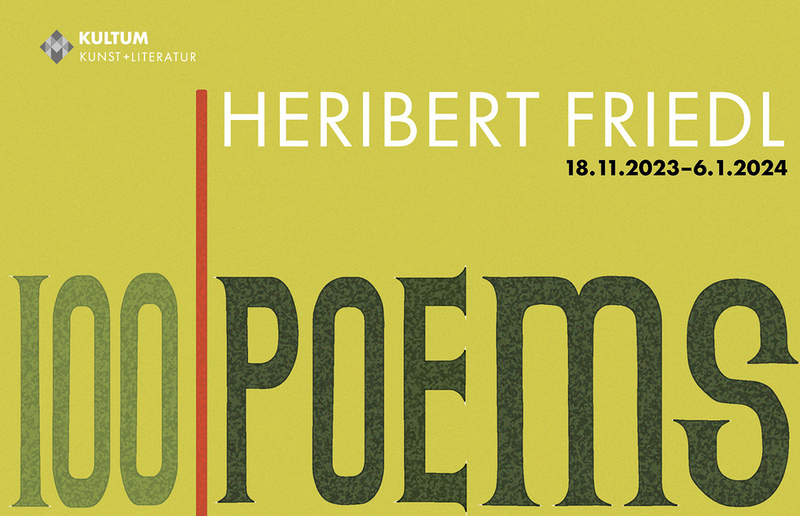
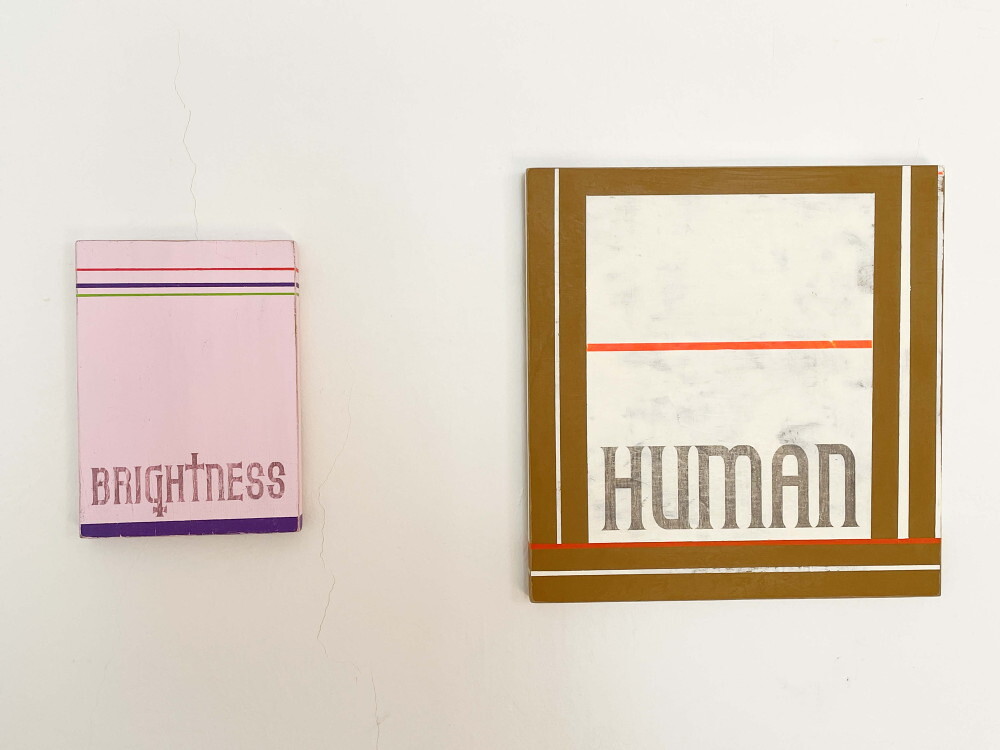
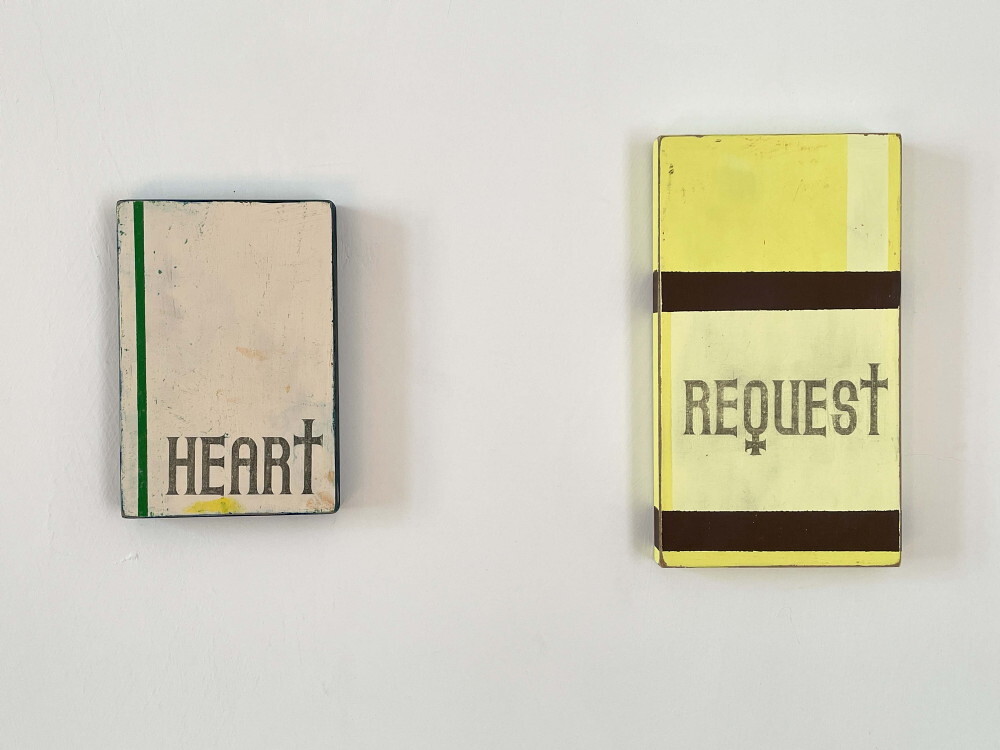
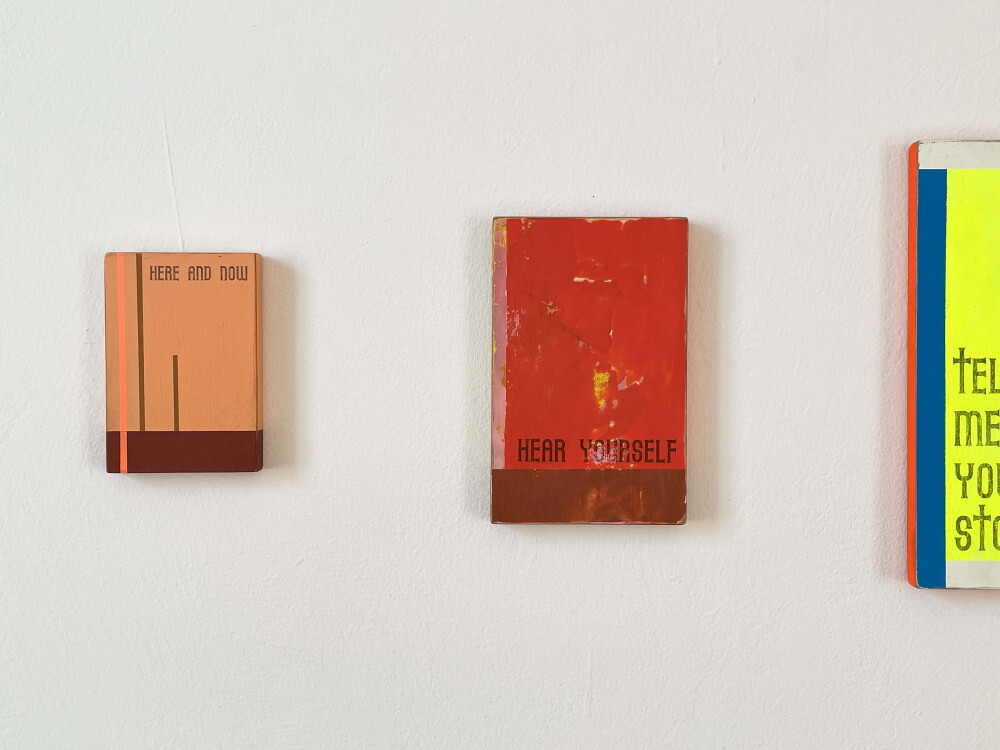
100 POEMS: Heribert Friedl, who has been known for decades for his "non-visualobjects", has spent the last two years painting linguistic condensations of immense simplicity and beauty in a "pressure wave" of inspiration. Originally begun out of a moment of existential grief, the poems in English (which usually consist of just one word) become touching "obituaries" into a world that we cannot know exists, but perhaps we can believe it: they are beguiling poems, even linguistic icons. 
The words painted on small MDF panels point to a different time, but also to a different gender and religious order. They are silent images, written icons of longing and consolation, presented in the KULTUM at Christmas and at the turn of the year.

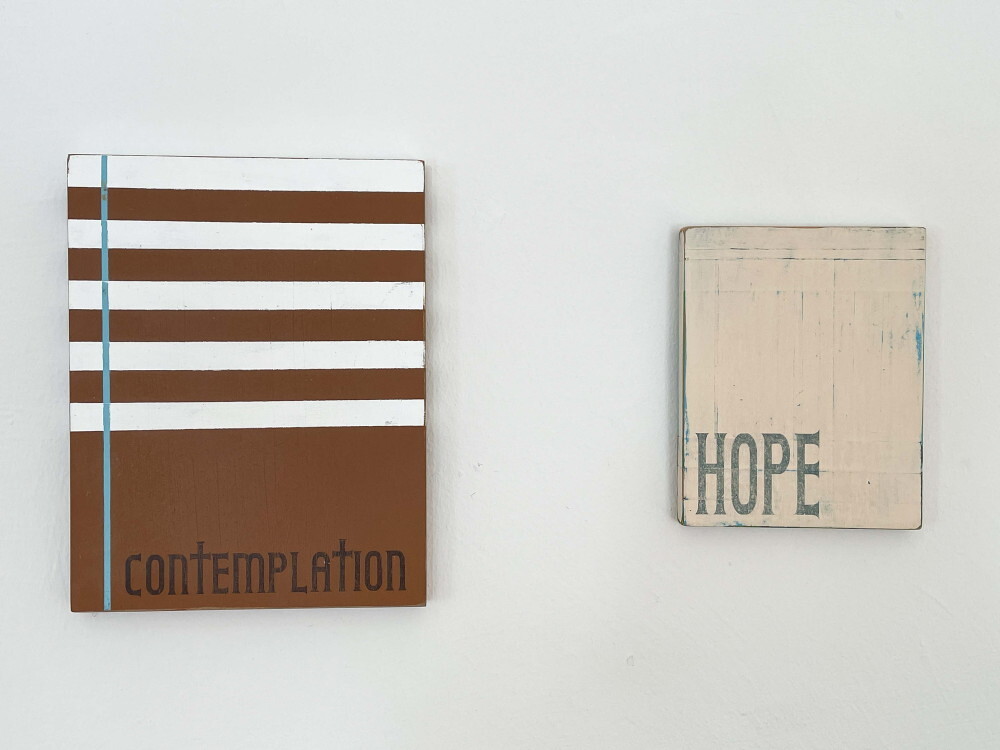
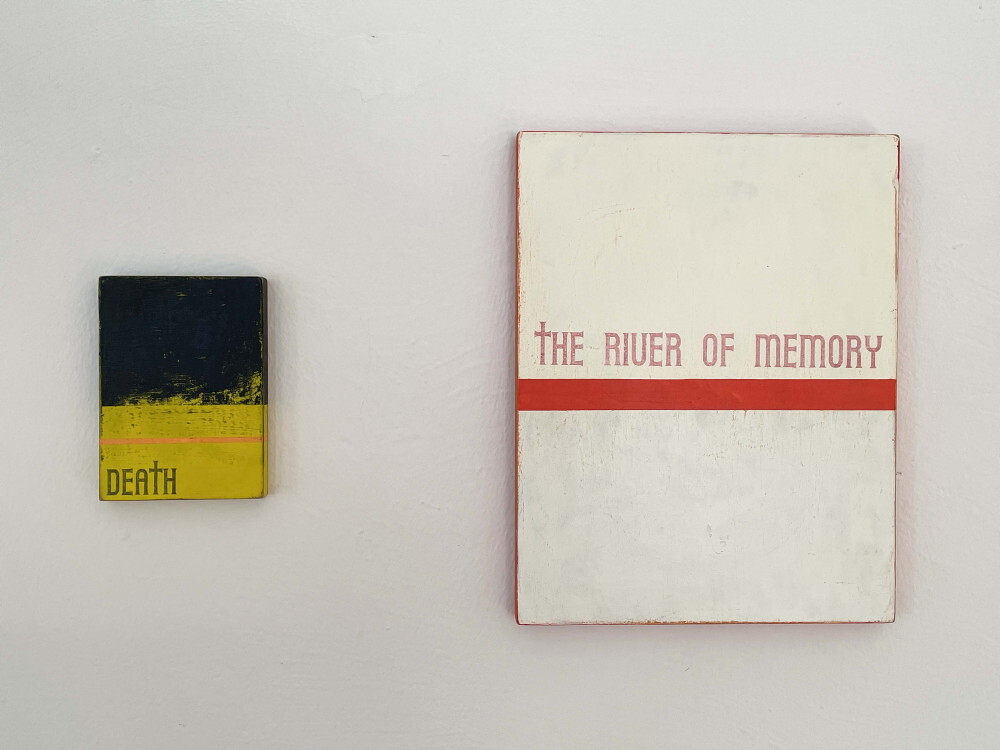
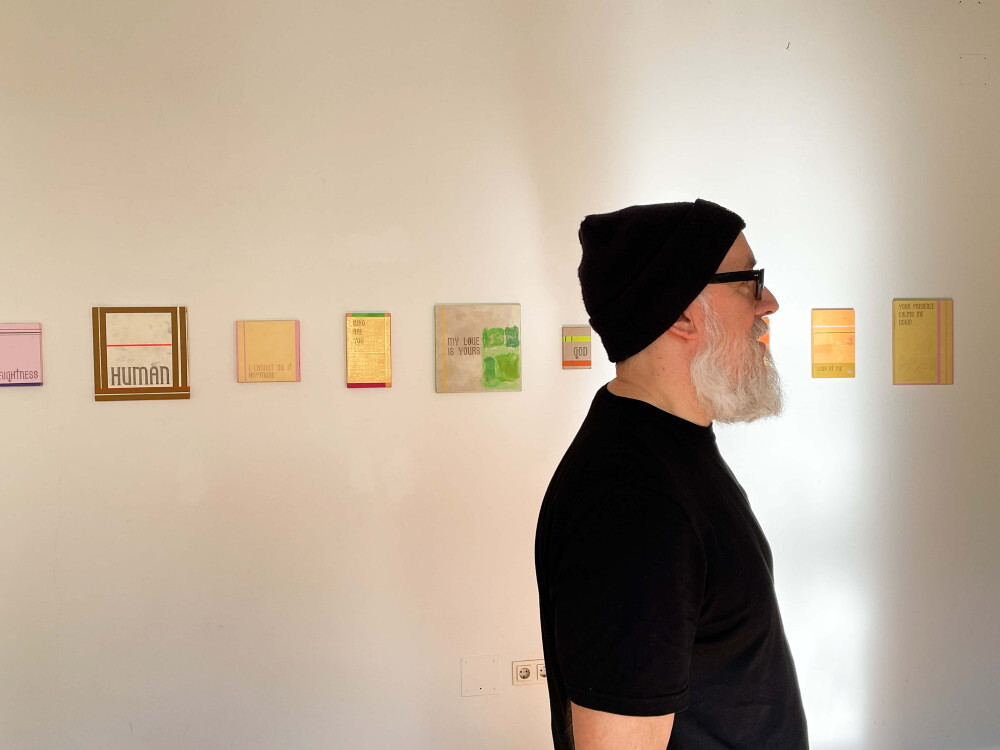
In this book, the 100 small pictures by Heribert Friedl, which for the exhibition at the KULTUMUSEUM in Graz were installed in the barrel-vaulted room of the former refectory in the old Minorite monastery in Graz, are archived as contemporary "devotional pictures". But there is no kitsch, no historicism, no world of yesterday preserved in this "prayer book"—on the contrary. The words, the sentences are drawn from pure life, its finiteness and how to overcome it, its hope and its talent for transcendence. As real pictures (works of art), these "writing icons" have a body whose edges are also painted—they are MDF wood panels and as such also have a corresponding weight. They are small pictures with balanced areas of colour that correlate with English sentences or words. The title of the exhibition refers to them as reduced poems, a hundred in number.


Zustimmung erforderlich!Bitte akzeptieren Sie Cookies von Youtube und laden Sie die Seite neu, um diesen Inhalt sehen zu können.

"Take yourself out, don't let it fill you up..., anyone can do that." Heribert Friedl said in an impressive conversation with curator Johannes Rauchenberger immediately after the exhibition was completed.


As the catalogue medium of the "prayer book" that the artist has chosen to document these images, it is reminiscent of a "Book of Hours" from a cultural and religious studies perspective. Books of hours in the late Middle Ages were adorned with the most precious illuminations by the best illustrators and represent special documents of a religious high culture as well as a very personal piety. In terms of religious history, this is a genre of books that, in accordance with (Christian) prayer practice, contain texts that structure the day: psalms, scripture readings and hymns. In monasteries, they are of course still maintained and cultivated as books. But in individual practice, the medium of the "book of hours" is increasingly giving way to the digital one: even people who have committed themselves to regular prayer by profession are increasingly doing so digitally.
What we find here is fundamentally a reverse process: from a digital auxiliary medium back to analogue time and the analogue body. And thus also a conscious use of time, the reduction of speed, the praise of repetition—but not in the sense of increasing the number of hits, but as an act of existential stabilisation that goes hand in hand with lamentation, memory, confidence, hope and consolation. When time is experienced in this way, something like "faith" becomes visible in Heribert Friedl’s pictures in the form of old, stable, enduring images. This is a quite extraordinary phenomenon, because "faith" in particular is usually something so alien in contemporary art production and, if at all, something so intimate that there is hardly any existential thematisation in the pictorial mode that is free of kitsch, irony or biting criticism. It is different here.


In Heribert Friedl's work to date, the analogue in the form of real images has seldom played a role. Rather, "ART IS NONVISUAL"[1] has always been his motto. Heribert Friedl has always critically scrutinised texts and images in these times of total digital overstimulation and image overload. He does this in a thoroughly ironic way: Friedl had already been digitally present in parallel to his exhibitions for a long time in the 1990s, with his website, which had the URL www.nonvisualobjects.com (and still does today). This creative term has been Friedl's guiding principle since 1996. In contrast to today, back then NOTHING was visible when you called up the website. As I remember from our first conversation, the artist was interested in the invisible. Hence: the invisible page—the contents of which only revealed themselves when you clicked the mouse. Hence: the white museum wall, whose images could only be seen if you evoked perceptions beyond the purely visual. And this essentially includes the scent. Friedl also took part in the "1+1+1=1 TRINITY" art competition at KULTUM in 2011. Coils of copper pipes were placed in the room as a sculpture, and when you operated the bellows with your feet, a fragrance was released—this work has been part of the KULTUMUSEUM[2]ever since.

More than 20 years ago, I exhibited his work for the first time at the KULTUM on the occasion of "Graz 2003—European Capital of Culture", as a representative of artists who had gained a foothold in the world with a special "approach" to art but had left Graz in the process. The exhibition was called "EX Graz". Friedl presented only white walls in an exhibition cell, there was literally nothing to see. But if you came closer, you could smell the surface; different scents structured the white surface.


Heribert Friedl has expanded his design repertoire over the years—he has worked with clothes that are documents of time and transience, of closeness and beauty, of scent and dirt: Most recently in the Museum of Contemporary Art in Admont Abbey, where he drew a "portrait of a most beloved person in the world and beyond" (2022) with a vast number of items of clothing, shoes, ties and scarves. But he also worked with sound, in 2020 in the Ursuline Church in Linz or in 2021 in the Mariahilferkirche in Graz for "Breathing In – Breathing Out", the exhibition during the coronavirus pandemic, which was also the exhibition for the reopening of the redesigned Minorite Centre: in a delicate, restrained manner, he composed a sound installation whose components are the bellows of an organ, a drop of water, rain and a dulcimer. "Tears of c" attempts to approach the theme of the breath of life both sonically and metaphorically. The breathing of the wind instruments was musically interwoven with the sound of rhythmically passing time. According to the artist and composer, the tears, sadness and pain in the form of drops of water and rain were due to the coronavirus period, which confronted people with their own and others' finiteness on such a massive scale. The music connected intensely and existentially with the place and its prayers, fears and hopes that had been captured over the centuries. At the same time, it was as if Heribert Friedl added something conciliatory to the heaviness with the overtones of the sound of a dulcimer. Whatever it was—a requiem, an invocation, a prayer: Breath was always linked—dum spiro, spero—with hope.


Heribert Friedl takes up this trail in the "100 POEMS"; now, however, he simply paints visible, tangible, haptic pictures, completely beyond his previous artistic practice. They have been created in three intensively designed "work blocks" of "PAINTINGS", which are called WIENER BLOCK (2022) and HINDINGER BLOCK I+II (2023) in the "working title". All three have a dedication: "Dedicated to Karl".


I can't remember ever before having offered an exhibition to an artist so spontaneously—especially as the planning for exhibitions takes a very natural amount of time. Nor can I remember being so "surprised" by paintings in my own view—perhaps the last time was when, as a young art history student at the Tate Modern in London, I was thrust into the room of "Mark Rothko paintings" (the paintings that Rothko originally painted for a restaurant but then withdrew). The colour surfaces of the Mark Rothko paintings, their overwhelming effect on the viewer, the immersion in a diffuse, imageless world, have very little to do with the paintings here, especially as those are large, oversized and billowing, while these are small, most of them smaller than DIN A4 and lined up in the exhibition in the large exhibition space in the historical ambience of a former monastery refectory. They are once again reduced in size in the booklet published for this exhibition; they take on the character of devotional images and the appearance of an artistic "prayer book".


Experimenting with the small format of a solid MDF wood panel leads the artist to colour organisations of surfaces, which he inscribes with words, board by board, always in the same—but differently sized—font, which refers to a different time in its cut.


The "Book of Hours" that we hold in our hands as "users" contains invocations, self-affirmations, promises, descriptions of states and expressions of gratitude from the very first variants—in the VIENNA BLOCK. In fact, just as the state of prayer has been known since man's gift for transcendence. The "YOU" referred to is initially the "YOU" lost through death; the request to come with him again when no one is physically there anymore, the announcement to "be here", the promise to be "YOUR MEMORY, YOUR MUSEUM", the pain of not being able "TO DO IT ANYMORE", the weeping for the other, the painful feeling of missing, the uttering of the word "LOVE", the promise to switch OFF and ON, the calm, the desire, the selflessness, the silence, your smile, a "THANK YOU". However, all of this is not simply a biographical processing, but rather a general experience where everyone "turns off" at different words. And comes to the realisation: "THE WORLD IS YOU". Suddenly, the experience, the certainty: "There is more". "There must be more." But at the same time the pain: "WHERE ARE YOU?" And the realisation that "YOU ARE MY MEMORY", "I AM NO LONGER YOURS"." Such a presence soothes.


Heribert Friedl told me about the process of creating these paintings that he experienced the words and sentences as inspiration—like a "pressure wave"—from which these linguistic condensations of immense simplicity and beauty then emerged. This resulted in intensive painting phases lasting several weeks in his studio in Vienna and on a farm in Hinding, Bavaria, from each of which three blocks of works were created.


Gradually, the grief, which was initially very strongly processed, sinks to a deeper level, which increasingly has the character of carrying and being carried. Individual words such as "DEATH", "FAITH", "GOD", "HEART", "HOME", "LIFE", "TRUST" are used. Memories of the "ENDLESS SUMMER" and the "BRIGHTNESS" come up again and again, a feeling of being able to let go ("YOU CAN GO THERE") spreads, a feeling of gratitude sets in, a kind of self-assurance of no longer complaining, of gradually "KNOWING HOW LIFE GOES (AGAIN)", a small form of security for one's own self. These are quasi "recited" sentences for this self that is precarious and still wounded: "I accept 'it' with an aura of gratitude." "I AM A PART OF YOU." "I AM YOU." "I HEAR YOUR VOICE". The still grieving self says this "slowly and carefully" to itself; it can also "speak without words". This is already another speech, an appeal, similar to: "LOOK AT ME." This is still an appeal to the lost you, but perhaps also a gained one, in the sense of a transcended you. It is also an encouragement from there: "LISTEN TO YOURSELF."


In the last work block of these paintings, which can be described as "written icons", the existentially elaborated mourning of the series painted so far, which already had the increasing character of a transcended "you" experience in the first HINDINGER BLOCK—with salutations, invocations, thanks, questions, almost praise—is transformed into a silent generality. There are no more sentences, no more questions, no more assertions, no more assurances for oneself, there are only individual words that describe something and at the same time everything that life would be, is or will be capable of, with its longing, origin, ability to relate, its emotions and the hope of a wordless understanding: "SOMEWHERE", "BEGINNING", "CONTEMPLATION", "CORRECTION", "DREAM", "END", "ETERNITY", "EVERYTHING", "EXISTENCE", "FATHER", "FEAR", "FEELING", "HEARING", "HEAVEN", "HERE", "HOPE", "JOY", "TENDERNESS", "MERCY", "MOTHER", "NOTHING", "NOW", "LOOK", "SIMPLICITY", "ONCE", "SPIRIT", "TOUCH", "UNDERSTANDING", "WORDLESS".


Heribert Friedl's—to use this word again—"Written Icons" are at the same time what the title claims to be: Poems. Writing has recently become a new form of artistic expression for the artist. Thus, both pictures and colourfully designed book pages are bound together in this "booklet". As pictures, they have a sensual materiality that is able to convey what is often no longer possible to convey: an experience of deeply felt faith. Friedl is fascinated by reduction and is able to show that where there is nothing, infinite greatness shines through, in the spirit of what Simone Weil wrote about the interpretation of images: "There is only one way to understand images—not to try to interpret them, but to look at them until the light suddenly dawns."[3]

Behind the zero point, the whole opens up. The pictures are an encouragement to stop ignoring as much as before and to familiarise ourselves with the question of where we can go when everything has been taken from us and when there seems to be nothing left.

The artist believes that everyone can do this: "Don't let yourself be buried, get out when you need to, listen in, only do what is really necessary: everyone can do this, even if we are all integrated into systems..."[4] Heribert Friedl has written "love letters" that transcend life and death. Each of these pictures is a book that breathes.

Johannes Rauchenberger


[1] Heribert Friedl: Art Is Nonvisual. Ausgewählte Arbeiten/Selected Works 1994–2015, Kehrer-Verlag, Heidelberg/Berlin, 2014.
[2] Cf. Johannes Rauchenberger: Gott hat kein Museum. Religion in der Kunst des beginnenden XXI. Jahrhunderts. | No Museum Has God. Religion in Art in the Early 21st Century. (IKON. Bild+Theologie, hg. von | ed. by Alex Stock und Reinhard Hoeps), Verlag Ferdinand Schoeningh, Paderborn 2015, S. | p. 944-945.
[3] Cit. in: Egon Kapellari: Bis das Licht hervorbricht. Fragen zwischen Kirche und Kunst, Styria Verlag: Wien-Graz-Klagenfurt, 2006, 159.
[4] 100 POEMS: Heribert Friedl in conversation with curator Johannes Rauchenberger, in: www.kultum.at/heribert-friedl (accessed on 19 November 2023).
zurück
Zustimmung erforderlich!Bitte akzeptieren Sie Cookies von Youtube und laden Sie die Seite neu, um diesen Inhalt sehen zu können.

Eröffnungsanspache von Kurator Johannes Rauchenberger
Zustimmung erforderlich!Bitte akzeptieren Sie Cookies von Youtube und laden Sie die Seite neu, um diesen Inhalt sehen zu können.

KURATOREN- und KÜNSTLERGESPPRÄCH mit Heribert Friedl:
SA, 30. Dezember 2023

FINISSAGE: SA, 6. Jänner 2024, 11 Uhr
Zur Finissage erscheint ein Katalogbuch.
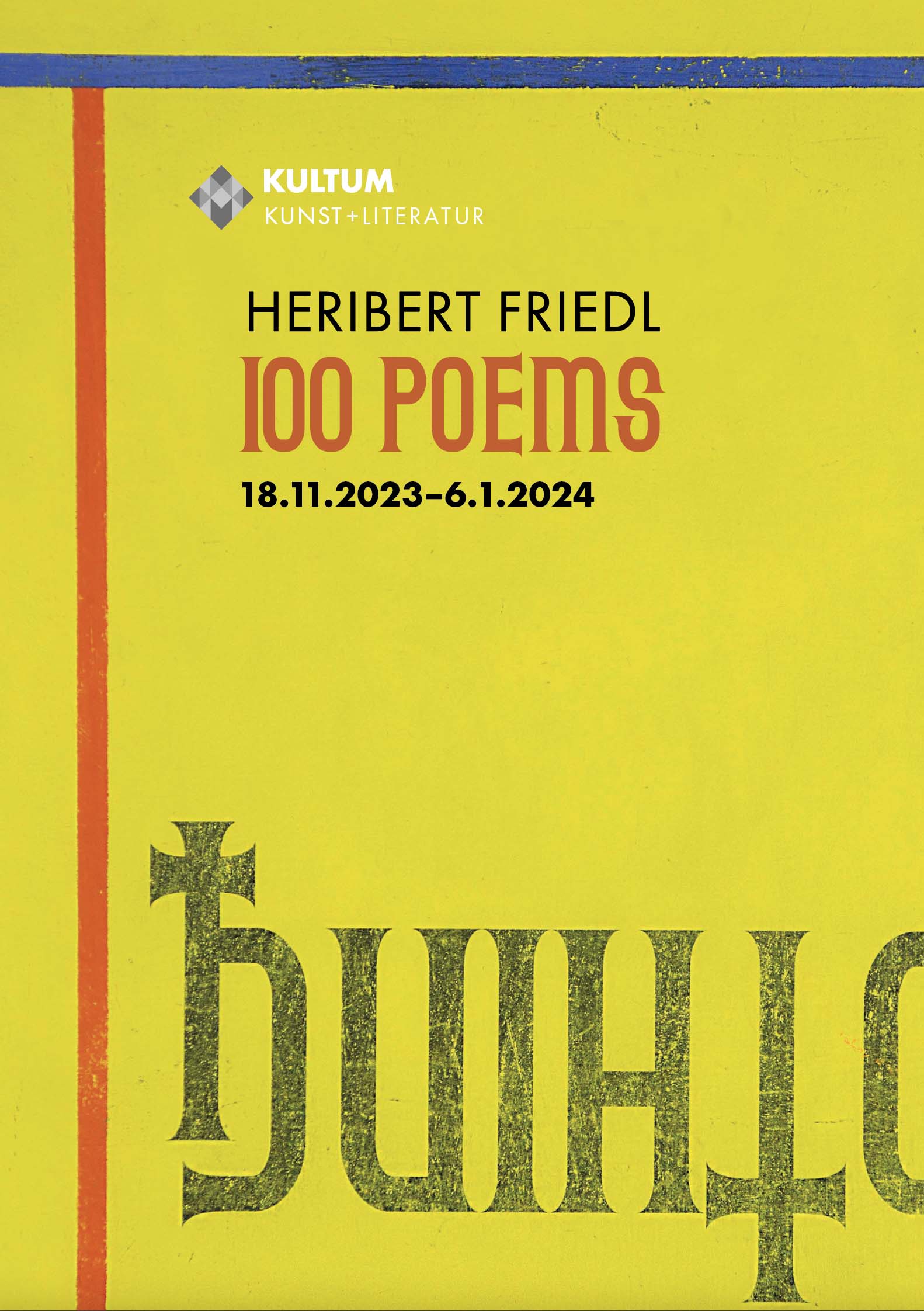
Ausstellungsdauer: 18. November 2023–6. Jänner 2024
Eintritt:  € 5,–/Jugendliche frei. Für Schulklassen Führungsbeitrag € 3,–
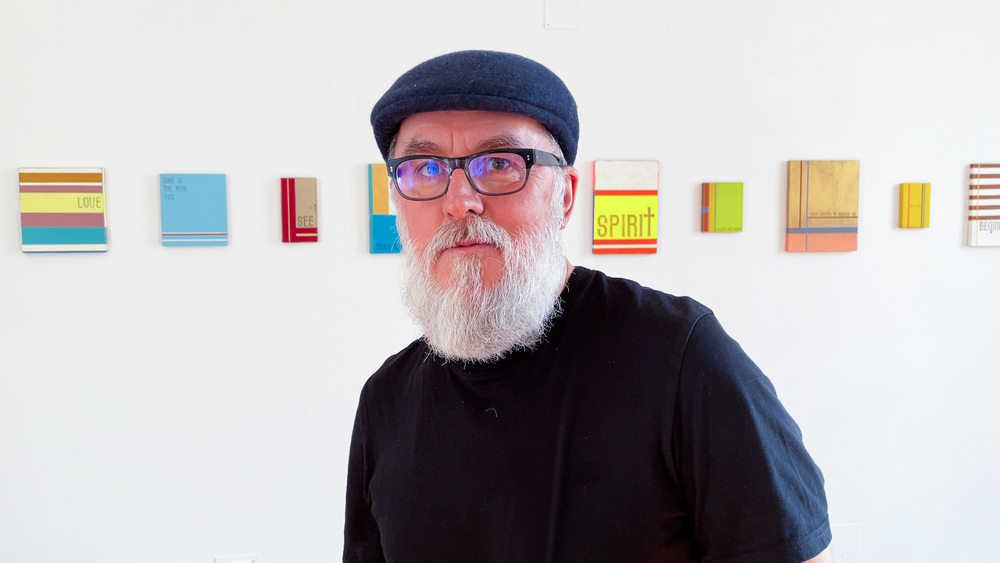
 

Heribert Friedl, Foto: J. Rauchenberger

Heribert Friedl

geboren 1969 in Feldbach, Österreich, lebt und arbeitet in Wien. Er studierte Bildhauerei an der Universität für Angewandte Kunst in Wien und ist dort seit 2021 auch Dozent. Seit 1996 beschäftigte er sich mit Duftstoffen und deren Wirkungen. Zeit, Reduktion, Narration und Partizipation spielen in Friedls Objekten und Installationen eine zentrale Rolle. Er selbst fasst seine Arbeit unter dem Begriff »nonvisualobjects« zusammen. Seine Arbeiten wurden in Europa, der Türkei und den USA ausgestellt. Im KULTUM wurde Friedl in den Ausstellungen „EX GRAZ“ (2003) und „1+1+1=1   Trinität“ (2011) und „EINATMEN–AUSATMEN“ (2021) gezeigt.  
Downloads
  • A5_hoch_Friedl.pdf
  • Friedl_Portrait.jpg

nach oben springen
Diözese Graz-Seckau
Partner:Wir danken für die Unterstützung

KULTUM. Zentrum für Gegenwart, Kunst und Religion in Graz
Kulturzentrum bei den Minoriten, Mariahilferplatz 3, 8020 Graz | Tel.: +43 / 316 / 71 11 33 | WEB: www.kultum.at; E-Mail: office@kultum.at


GOTT HAT KEIN MUSEUM. Aspekte von Religion in Kunst der Gegenwart. In Kooperation mit steirischer herbst 25

27. September 2025 - 11. Juli 2026

Öffnungszeiten KULTUMUSEUM:
DI - SA: 11 - 17 Uhr | SO + Feiertag: 14 - 17 Uhr (Winterzeit), 15–18 Uhr (Sommerzeit) | MO: Ruhetag


Aktuelle Ausstellung des KULTUMUSEUM im Spiegelgitterhaus Gleisdorf:

ab 17. Oktober: Gerhard Lojen (1935–2005) zum 20. Todestag

Öffnungszeiten Spiegelgitterhaus Gleisdorf: FR 17–19 Uhr, SA 10–12 Uhr.


Rechtsform: Das Kulturzentrum bei den Minoriten ist eine Körperschaft öffentlichen Rechts | UID-Nummer: ATU 55810000

  • Impressum
  • Datenschutz
  Anmelden
nach oben springen