"Paradise is temporarily closed." ninavale
Paradise is temporarily closed
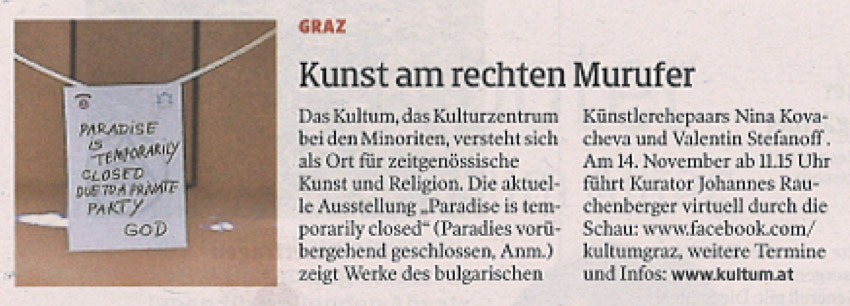
The reason for this—eschatological?—lockdown was a party, the note was signed by "God". In front of the locked room, the visitors became acoustic witnesses of an "apocalyptic rider" who wanted to ride the way to paradise through a violent thunderstorm and in the end cried out to God: "Where are you?" The signpost there revealed the signature of the Way of the Cross with the walking man who bore a cross. From the door opposite came the voices of a heavenly party from which the visitors were excluded: This was already shown by the sign that denied entry to this room, on whose floor birds flew: “Paradise is temporarily closed due to a private party. (God) ".
At the beginning of this exhibition there was a locked room, on whose floor birds flew in the form of a spatial projection, thus assigning the viewer a higher position. The tape that closed it documented the reason for its temporary closure: "... due to a private party" was more reminiscent of Zeus and his celebrating heaven of gods than of the Christian image of heaven, except that in times of secularized heaven during the exhibition in autumn/winter 2020/21, one thought above all of the “devil incarnate” scenes of closeness and embrace, which governments around the world forbade and instead forced people to adopt new rules of conduct, with masks and social distancing in all living, learning and (former) recreational areas. But who ordered this closure? The notice on the tape was obviously from the highest authority: the closure of heaven was signed off by God himself, admittedly only on a kind of memo. But at least: on official company paper. Because the note contained a watermark with an eye in a triangle and a circle. It thus combined ideas of the Trinity of the Christian image of God from the late Baroque period with the sign identity of the Freemasons as well as the first national convention of the French Revolution, and even that of the dollar bill. “There are many gods,” said Valentin Stefanoff in a Skype interview with his typically friendly, ironic way of communicating in his expression, which was broadcast on the TV program ORF-Orientation on the occasion of this exhibition, “in banks, for example, or in politics—the public one Want to lock up paradise in order to create your own party. But that—I think—will only be temporary. "[1]
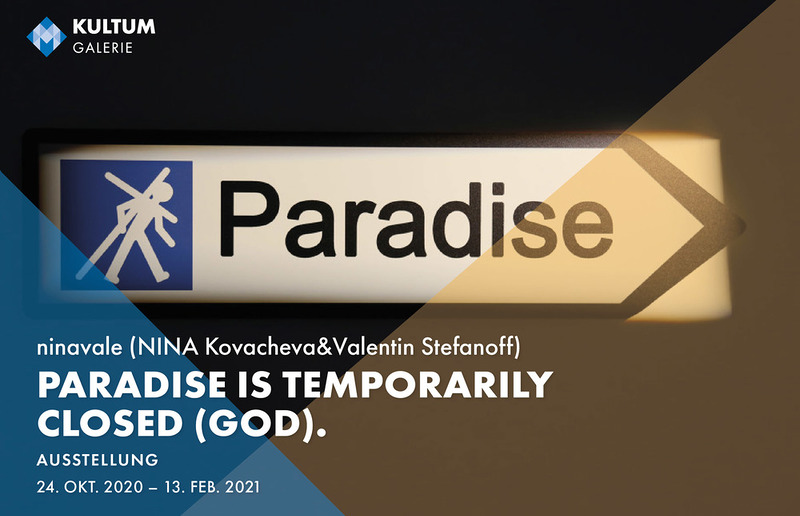
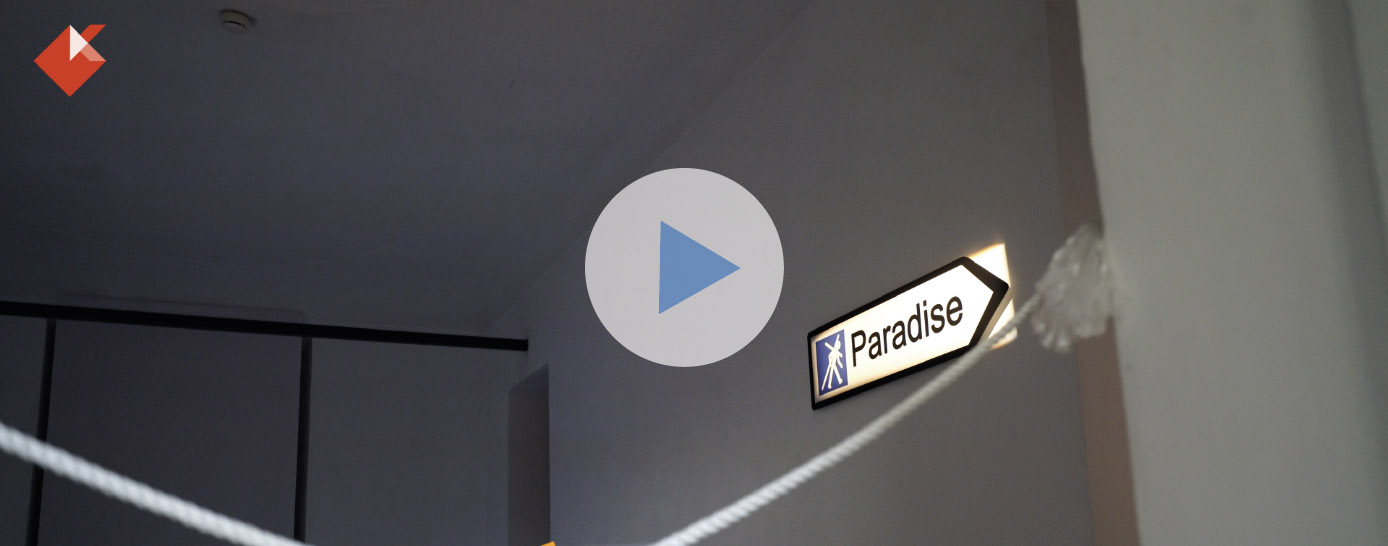
A traffic sign on the right-hand wall of this closed room, on whose floor the birds flew, even showed the direction to paradise. Although such street signs do exist in reality—at least in countries as historically determined by the Christian religion as in Austria—they also exist as the opposite: There they do not read, for example, "Himmelreichweg" or "Paradiespforte", but "Hart", "Einöd", "Höllboden" or "Gottesgraben". But here: "Paradise". The striding man was given some vexation, because he was not just walking, he also carried a cross on his shoulders: a remnant of the Christian initiation into heaven, which not only involves constant walking, but also carrying the cross. “The question is, where do we have to go to get to paradise? We think we have to find it in ourselves. This is the right place. That is the only place where we can be happy.” And further: “One of the questions that we want to raise in the exhibition is: can paradise really only be found if we carry the cross?
Or is there another way to get there?”[2], the artist explained in the interview, but was immediately interrupted by her partner: “I do believe that you need the cross to get to paradise ...” [3]. Demonstrative disagreement, a smile again across the screen.
The direction of the sign pointed to a closed door, through which came a visually dim light, yet an acoustically clear street noise, emergency vehicles, thunderstorms. But these were only moments that had passed. For 20 minutes you could hear the clatter of a horse’s hooves, at first surrounded by the noise of the cars, but then increasingly solitary; the horse was evidently entering the vast landscape. Finally, a violent thunderstorm caught the horse and its rider by surprise. Gradually a cough also became audible. In the meantime, a police car drove by with its horn blaring. The rain did not abate, the steps slowed, a scream could be heard. There had long been different surfaces, no longer the hardness of the asphalt, stones later, then grass ...
A rider headed in the direction of paradise: In the context of art, the “apocalyptic rider” is of course invoked in such a thematic setting. In the 6th chapter of the last book of the Christian Bible they are positioned as messengers of the approaching Last Judgment. The previous chapters (Rev 4–5) are determined by the book with the seven seals, which neither man nor angels can open, only the Lamb of God. In it are the closed secrets of world history, the unfathomability of injustice, violence, wars—a literary metaphor of the first century AD (in persecution already beginning) that the meaning of history remains closed.
The horse and its rider in this exhibition are also burdened with this weight of ignorance. “We lost our way,” said NINA Kovacheva in the conversation about the exhibition. “For me this phase is like a sign that we have to pause. As if the earth had stopped turning. We have to stop walking around—from left to right. Talking too much and making too much noise all the time. We need to be quiet for a moment. See what's going on inside us and prepare for something new. Something much better. We have probably been on the wrong path for far too long. "[4]
The seemingly eternal trot of the horse's hooves in this acoustic installation finally slows down, and towards the end the rider shouts into the landscape: "God, where are you?"[1] Graz: Paradiesverweigerung und irdischer Lockdown. Valentin Stefanoff und NINA Kovacheva im Gespräch mit Christian Rathner, ORF 2 – Orientierung, 6.12. 2020, in: https://religion.orf.at/tv/stories/3203370/
[2] Ebd. [3] Ebd. [4] Ebd.
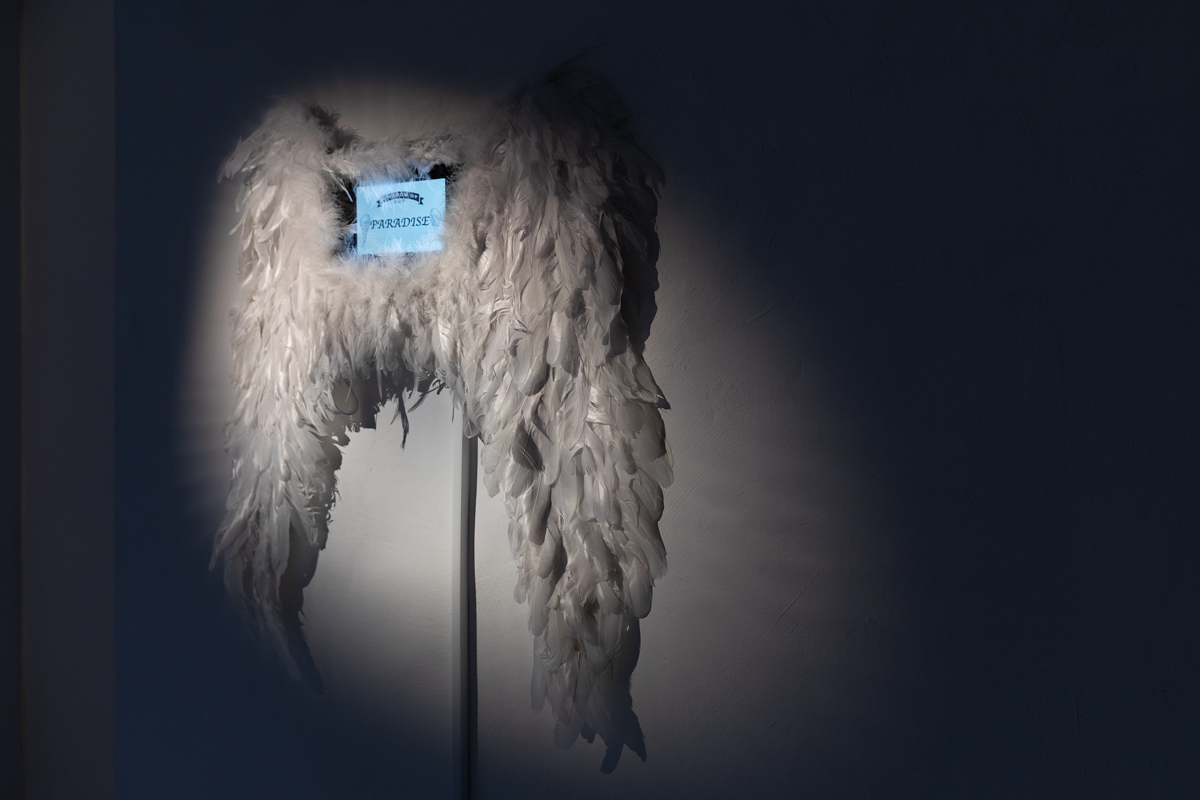
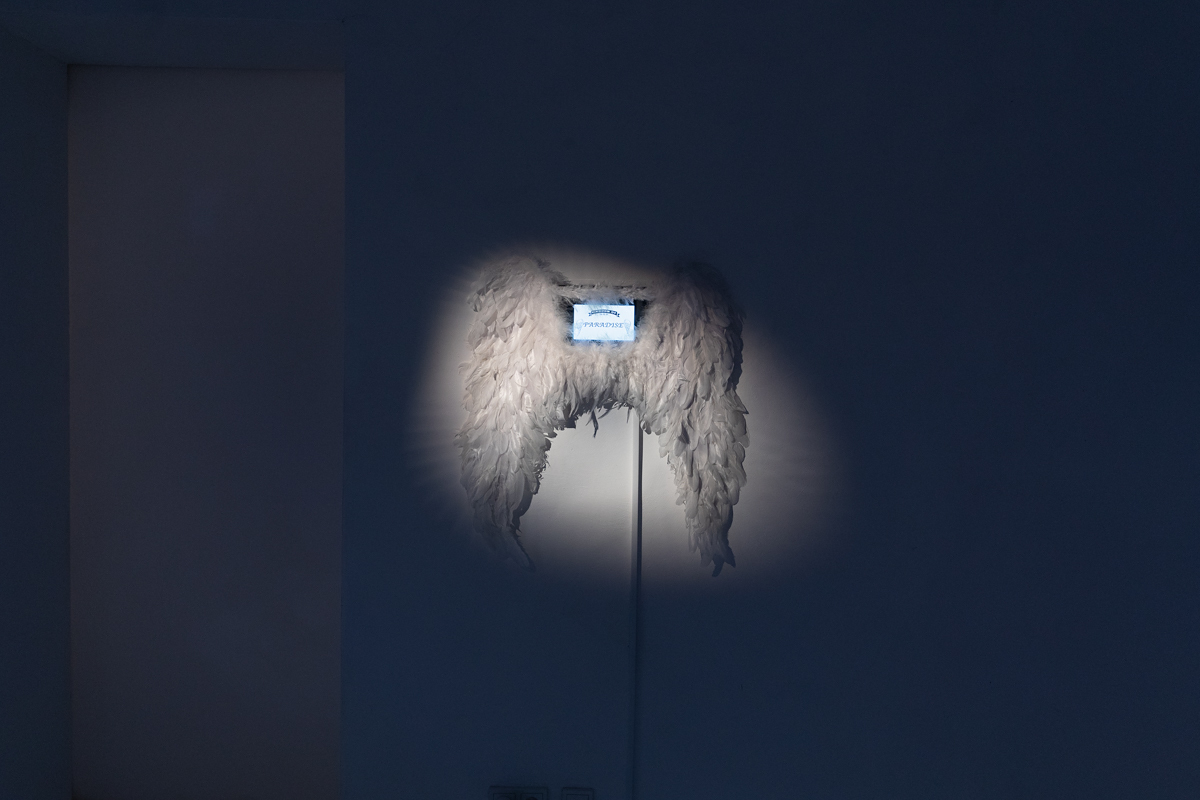
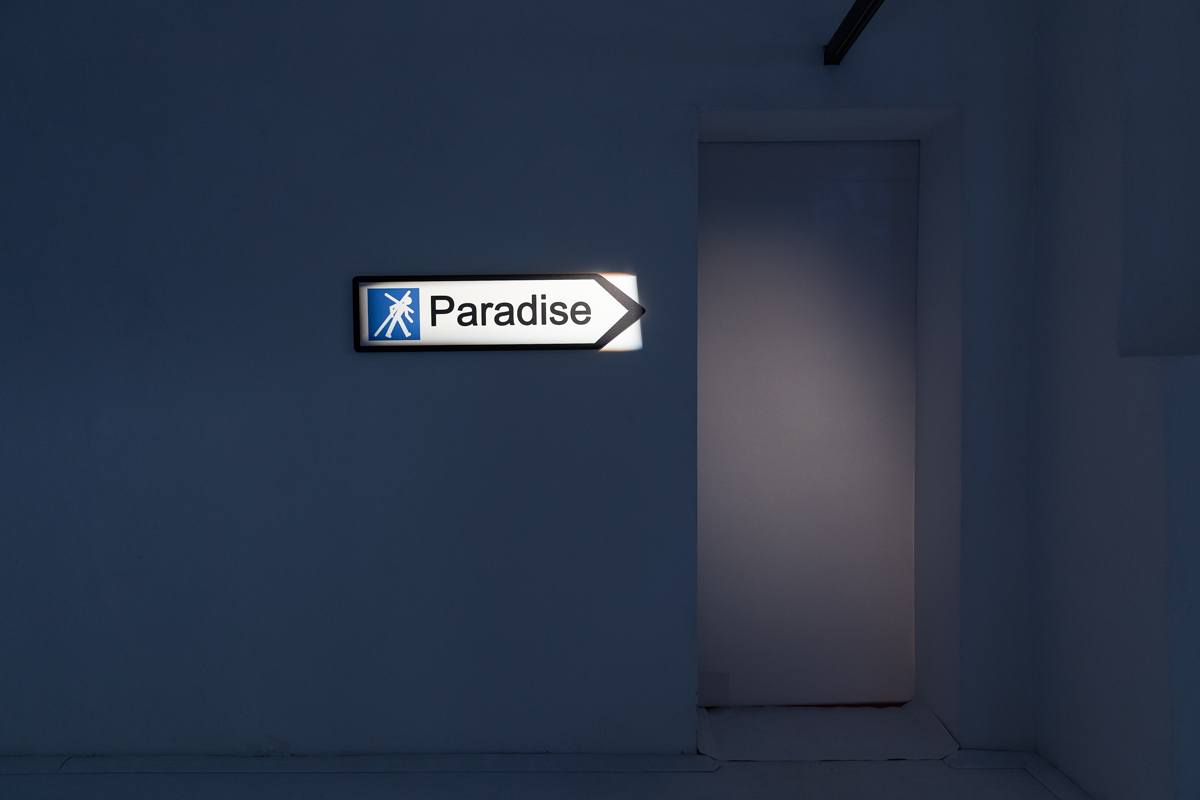
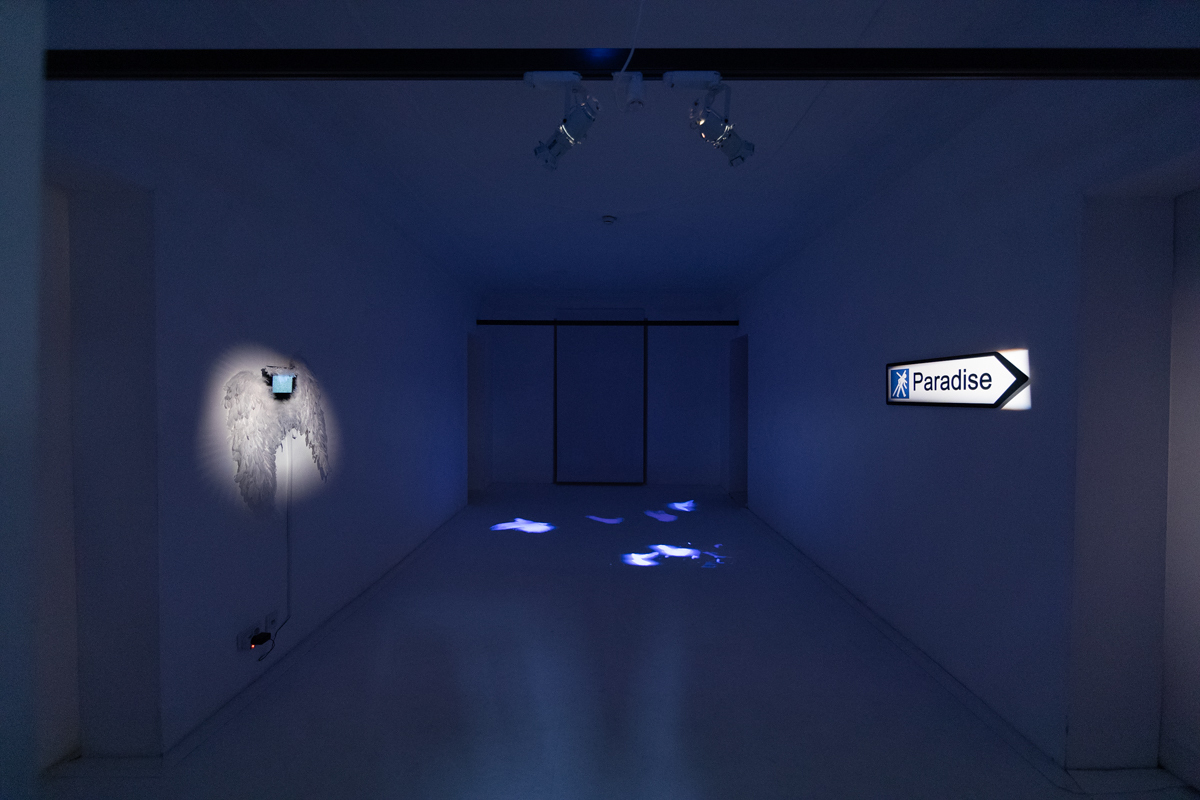
ninavale: Paradise is temporarily closed, 2020, Rauminstallation: VIdeo, 2 Akustikräume, Engelsflügel, Monitor, Verkehrsschild. KULTUMdepot Graz, aus: ninavale: Paradise is temporarily closed (2020/21)
In the setting of the first exhibition room, he seemed to be in the opposite room. From this also closed cell of the historical Minorite monastery in Graz from the beginning of the 17th century, voices could also be heard, sounds of a glockenspiel, for example, familiar to us from childhood. Melodies of longing and wellbeing, like "Silent Night". But also very simple scraps of happy conversations, sometimes laughter. If you followed the logic of the installation and its title, this was the private function in heaven, from which we were separated by a closed door and, before that, a cord with a note from God.
But although a small monitor between a real pair of wings on the wall at the entrance to this locked room tentatively broadcast a "Welcome", the overwhelming majority of airtime on this screen consisted of white noise. But the transmitter of the “Welcome” was also clear: it was the “Kingdom of God”. There was no doubt about that. Nevertheless: it was the radio interference that predominated. Looking into this room made us observers of a different state of being, looking at birds in flight, probably pigeons, in the night. Floating in limbo.
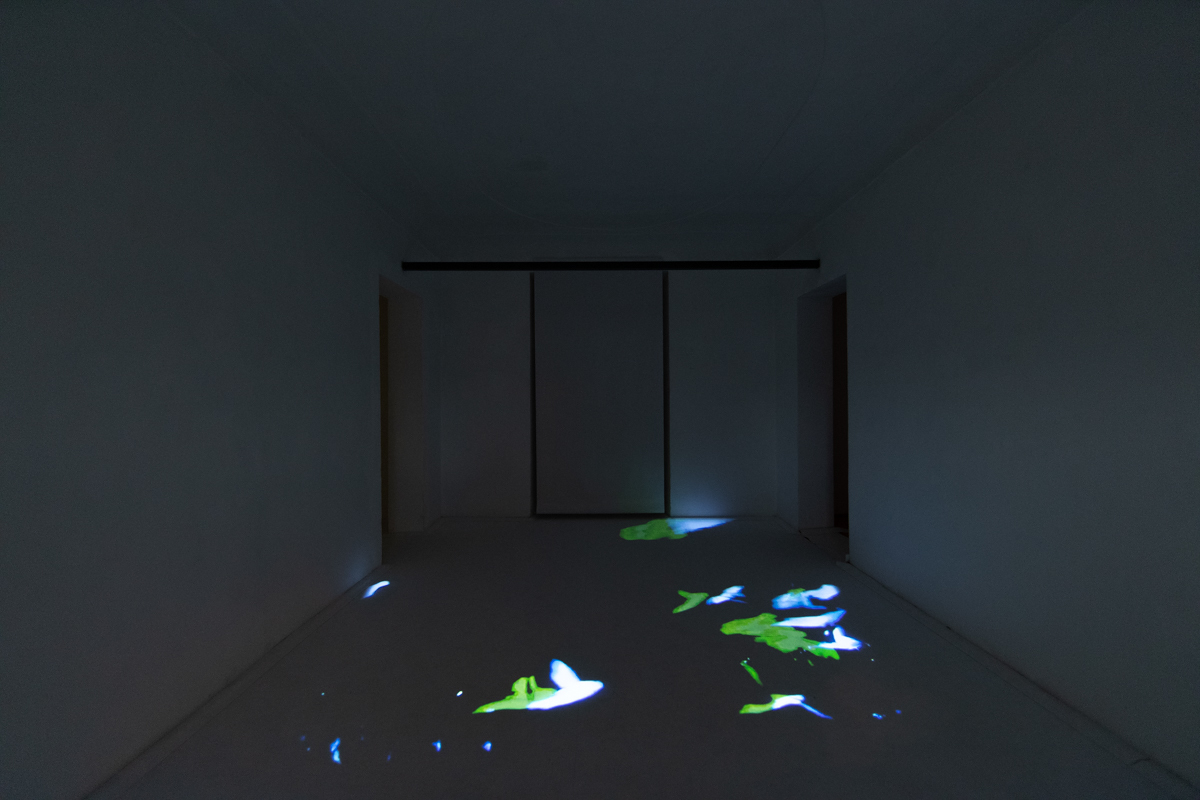
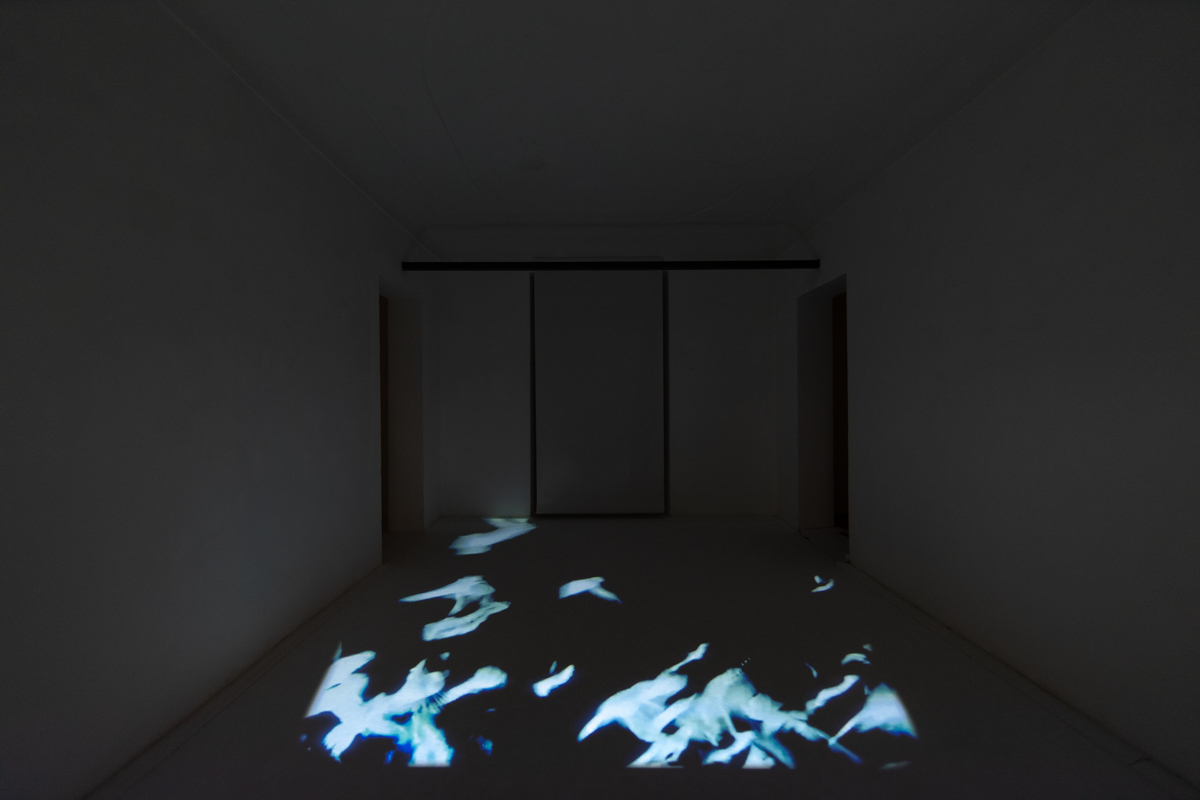
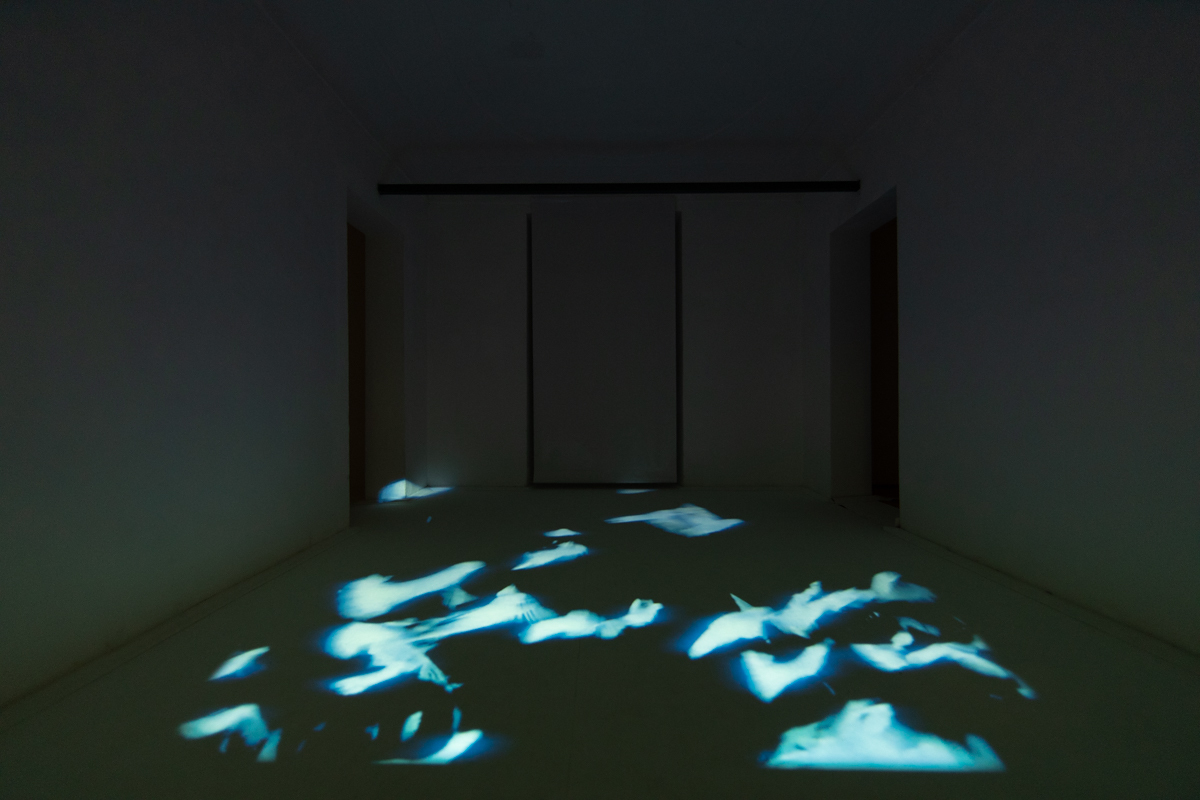
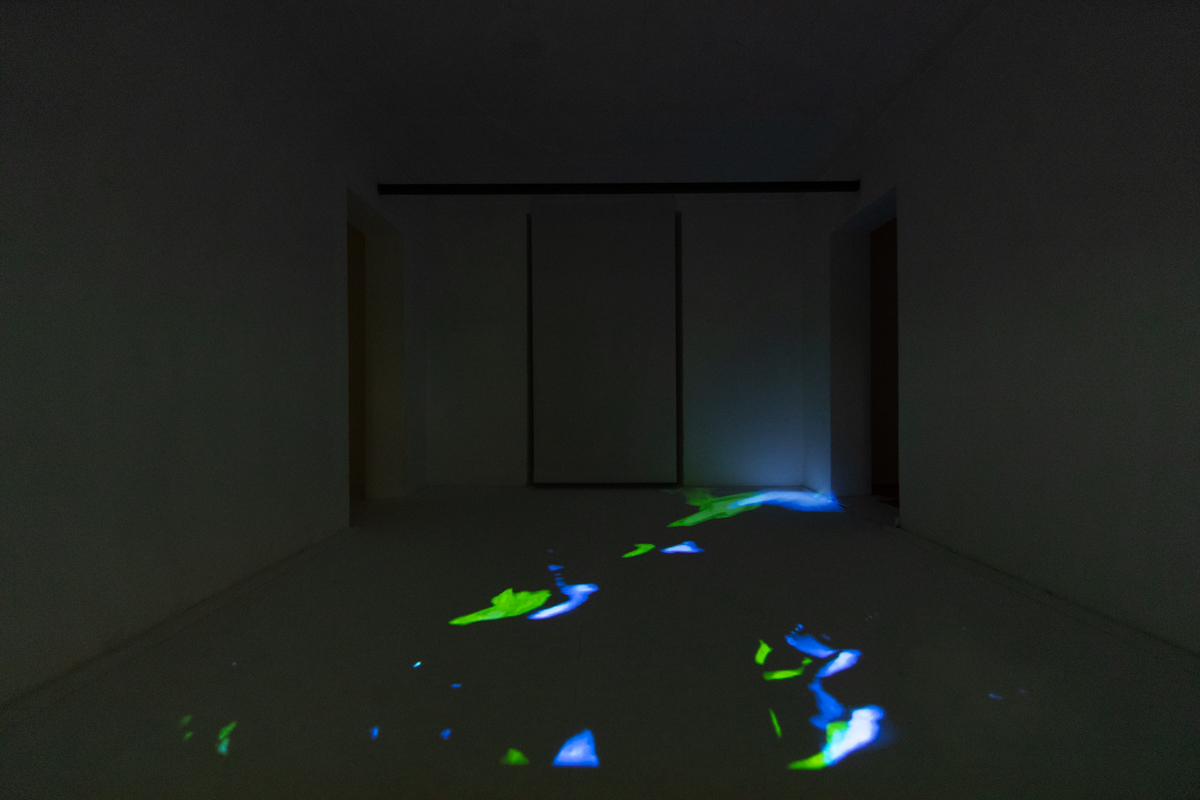
ninavale: Paradise is temporarily closed, 2020, Rauminstallation: Blick auf das VIdeo mit fliegenden Vögeln
Adam&Eve
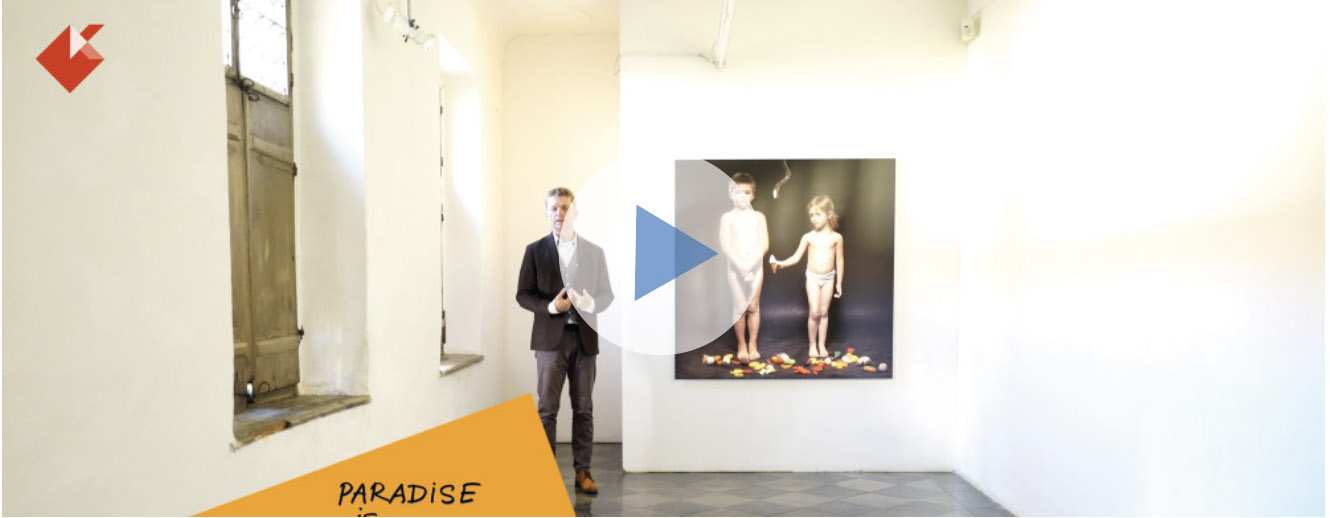
Adam and Eve as children? This is not the phase of life that art or theology has been interested in so far. Except for NINA Kovacheva—and with the vulnerability of the child's body, she takes up the story of the interpretation with Adam and Eve. What is temptation? What is desire? What is sin? It is a passionate image against the sexualization of the child's body, especially on the basis of religion.
The closed heaven in this first exhibition room had a reason: the party. There is a reason for the closed heaven in the Bible: the bite of the apple, which the serpent advised Eve and Adam to take (Gen 3). We were reminded of this when approaching the room mentioned at the end of the first exhibition corridor. There Adam and Eve were shown in a pose—not in the familiar phase of life with young, erotic bodies, but as children. As is well known, the subject had its heyday when the human body, its anatomy, its grace and its charms were discovered in Christian art: in the Renaissance. NINA Kovacheva alienated this motif not with adolescent bodies, but instead with the bodies of children. And it was disturbing—similar to how Rembrandt van Rijn once portrayed the couple as an old couple marked by life. The fragility of the human body, its exposure to violence, abuse and loneliness shines through again and again in Kovacheva's work. But especially here. The corpus delicti in this picture was a plastic ice cream, one of many plastic toys used by children today. More such "fruits" were lying on the ground. As in the whole series, it is (also) about the overwhelming demands of today's children in a consumer society. The back projection into an erotic atmosphere, with which the subject has been charged by the artists, supported by the theologians’ fatal theology of original sin, shows the two children as vulnerable young people in the horizon of sexual abuse by Church perpetrators.
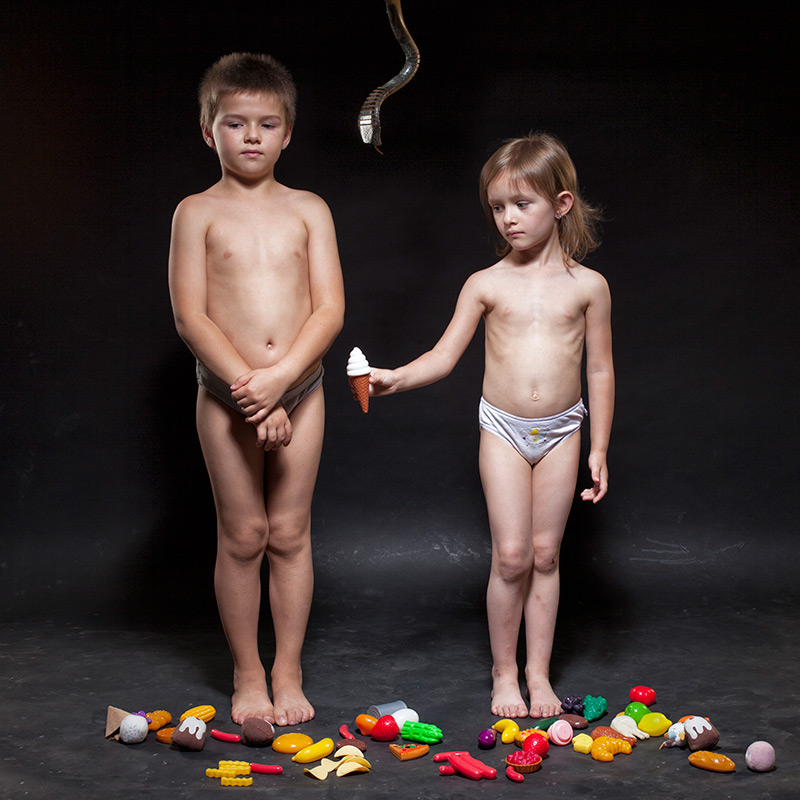
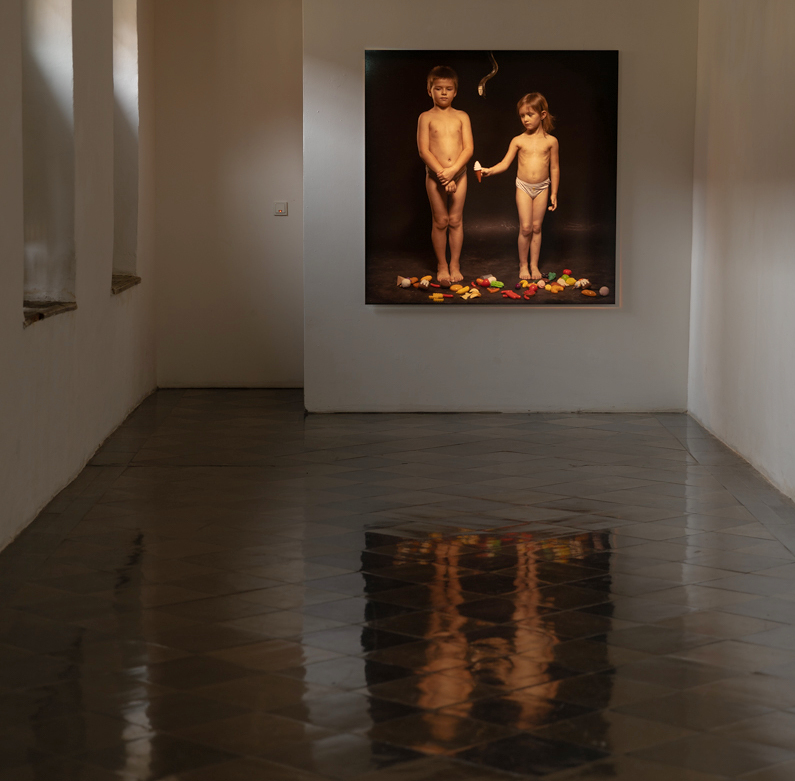
NINA Kovacheva: Adam & Eve, (Five Biblical Stories), 2012. Foto, 140x140 cm, KULTUMdepot Graz, aus: ninavale: Paradise is temporarily closed (2020/21)
iHeaven
A gold-plated iMac promises brightly in its analog inner workings: "iHeaven"! The virtual iCloud in the form of the analog lettering makes the algorithm oppressively visible, which now calculates on a virtual cloud where God the Father himself sat on it 200 years ago. However, this cloud is fed by its users.
Although the plastic ice cream on the staged photograph “Adam & Eve”, which comes from the five-part series “Biblical Stories”, replaced the bitten apple, in a third arrangement in the context of the lost—or: closed—paradise, this is the Apple company logo resumed. The inside of an iMac shows the lettering "iHeaven". So is it not lost after all? As a semantically unmistakable, familiar icon for our present, the iCloud lit up, in other words the “cloud” where we store our data in the digital nowhere: secrets, insights, memories, passions. In the history of incipient secularization at the beginning of the 19thcentury, clouds are the place that, as an uninhabited place, took over from the once inhabited place where, centuries before, God the Father with his court or the Trinity with Mary, (arch)angels and the Saints had been thought to exist. God is no longer on the cloud, but that's where we are with our data: The algorithms that are increasingly approaching us as omnipotence fed with our own data are also recalled in this little "iHeaven". Are we not far more submissive than a misguided conception of God about dependence ever could be? At a time of pandemic restrictions, outsourcing to the digital was a communication option and form that was able to overcome time and space. But the lack of presence, of corporeality and its aura was formative in this collective experience. And “iHeaven” is far from being a “heaven”. The solution to those questions Heaven has promised in the memory of humanity since Adam and Eve, even less so.
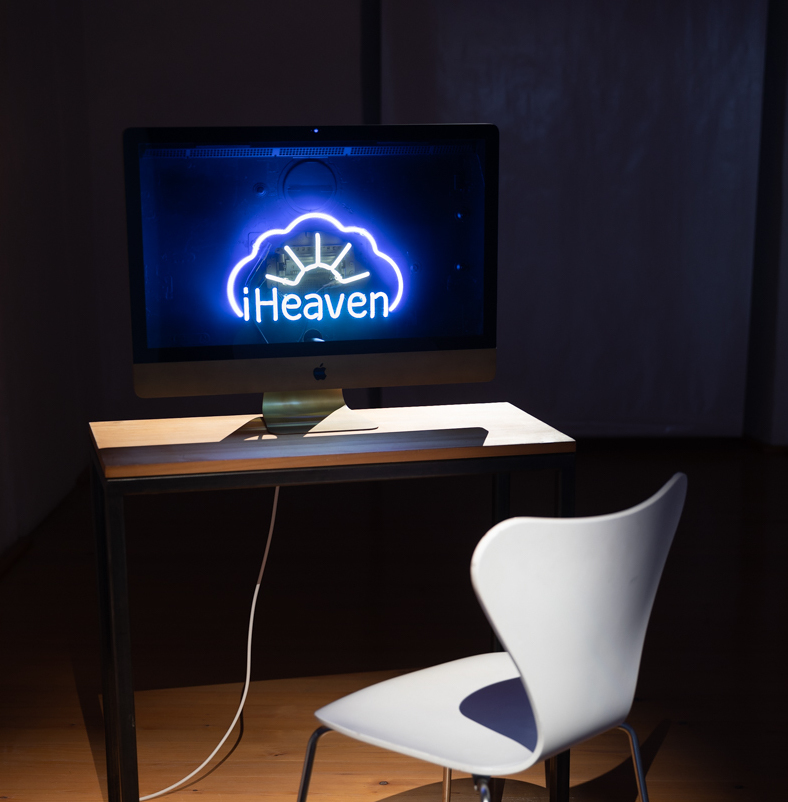
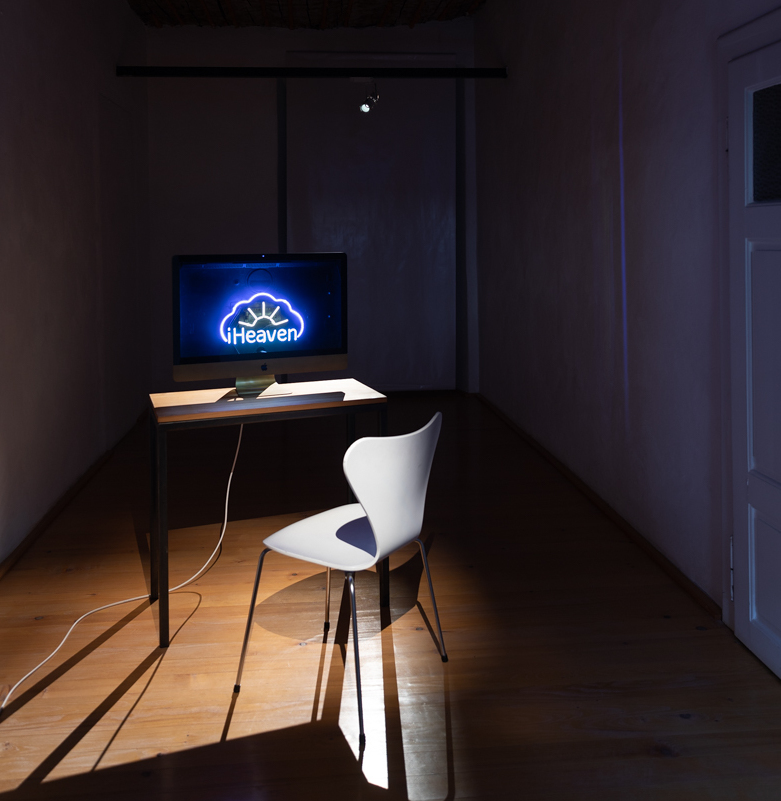
ninavale: iHeaven, 2020, Bildschirm, Neon, KULTUMdepot Graz, aus: ninavale: Paradise is temporarily closed (2020/21)
We the poor of this world
At the beginning and at the end of the exhibition, “We, the poor of this world” had the say… Your message: Refusal. Denial of the Logos, as a synonym for spiritual rule. Refusal to consume as a synonym, to lose inner freedom. The opposing voices reveal themselves as gods of this world, whom "we, the poor of this world" will not follow. Its truth even exposes the logos—and with it the claim to interpretation of this world.
The transition to the second wing of the exhibition, in which an answer to the questions raised in the closed paradise was drafted, was bridged by two works, which at the same time also formed the first works that the visitors encountered during a real visit, which was only possible for a few days. “We, the poor of this world”, a video by Valentin Stefanoff, and “enjoyment” by ninavale in the form of individual illuminated letters, stored in cardboard boxes.
In “We the poor of this world” (2014) Valentin Stefanoff lets the “poor of the world” speak. Sentences rattle on them that turn them away: from beautiful weather to the occidental "logos", the synonym of occidental knowledge, they conjure up the surface, are confronted with the colonial power imbalance of helpers, with "business" manuals and with the neoliberal system of customer loyalty as the reciprocal trap of empowerment through consumption, you can hear the madness of annual traffic jams during vacation season. You will hear Francis Fukayama and his “End of History”, also Plato from his state, Lewis Caroll, himself Jesus of Nazareth from the Sermon on the Mount. But always: refusal—and freedom. The sampling of these sentences is thanks to a collaboration with the philosopher Lubomir Terziev, who also reads the text in the video.
At the time when this exhibition was taking place, this narrative was like a concentrated commentary on the now. Only two scenes determine the five-minute video, in which individual sentences with very different meanings, times and authors are blended using a bold sampling method. A homeless man feeding the pigeons—it is the same person (in Paris) who also directed the pigeons in the first exhibition room—and a dilapidated Eastern European cemetery with Glagolitic characters.
The sentences are lined up in such a way that "the poor" are the sounding board of the counter-speeches that come up against them: "We, the poor of this world ..." is followed by the first interruption: a weather report. "We, the poor of this world ..., [...] we have nothing and we have everything, not here and now, not there and then, but everywhere and forever." Because the world in which they say this is full of business, full of gas stations, full of holidaymakers who are solvent. To refuse the logos—with a long "O"—in this situation. They don't need branded articles. But does “logos” mean the Greek word? Then the gesture of refusal becomes more fundamental—because logos is the synonym for the power to define time: “We don't have the logos, for the logos was at the beginning of time; whoever has the logos is in possession of time.” Valentin Stefanoff's video work lets the poor settle accounts—with the logos of the brands or with the logos that define knowledge, definition of time and power. An instruction from a business manual follows: “By empowering your employees and serving satisfied customers, you are in a much stronger position to retain and sell customers and to increase success with your customers."
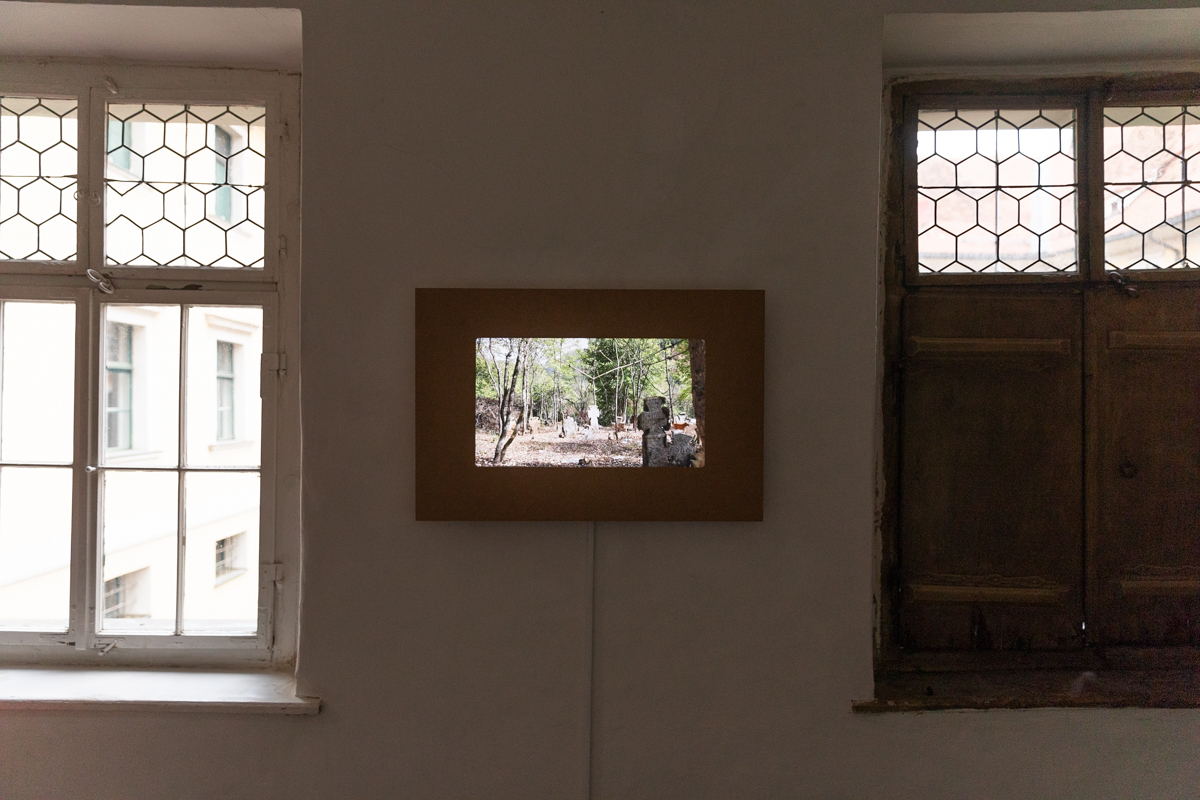
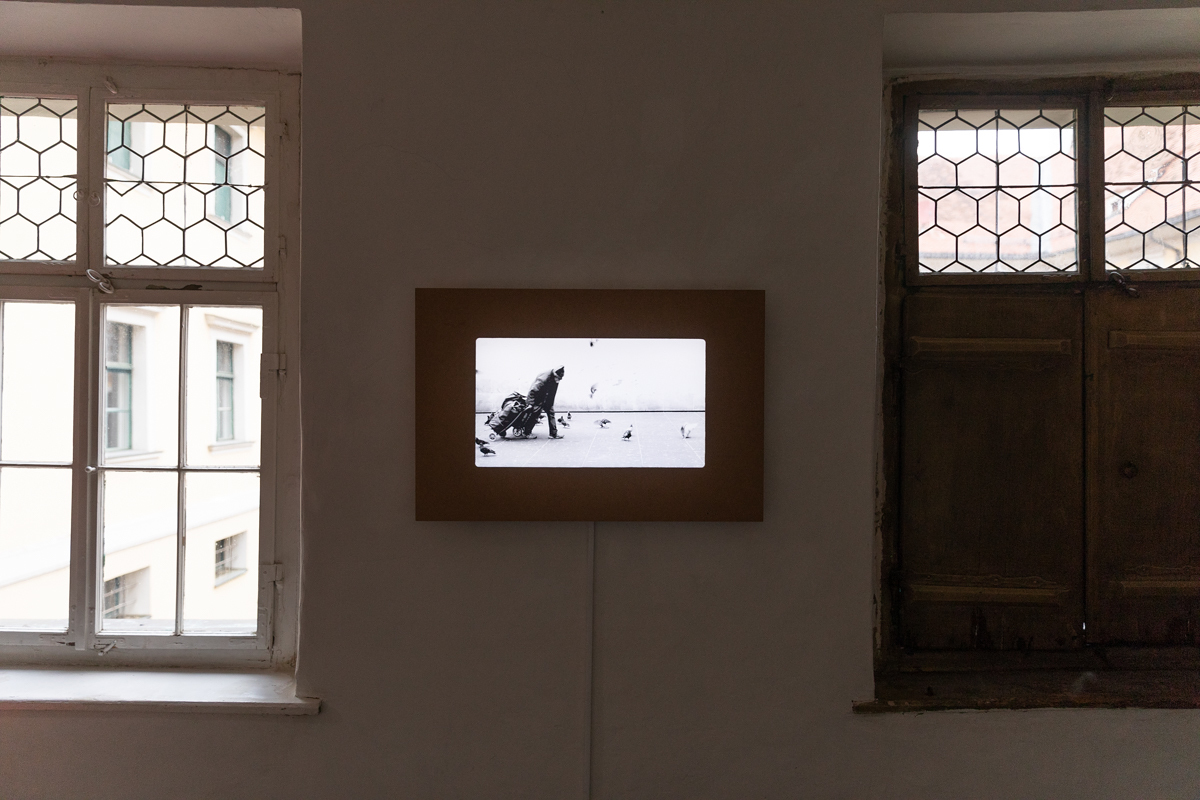
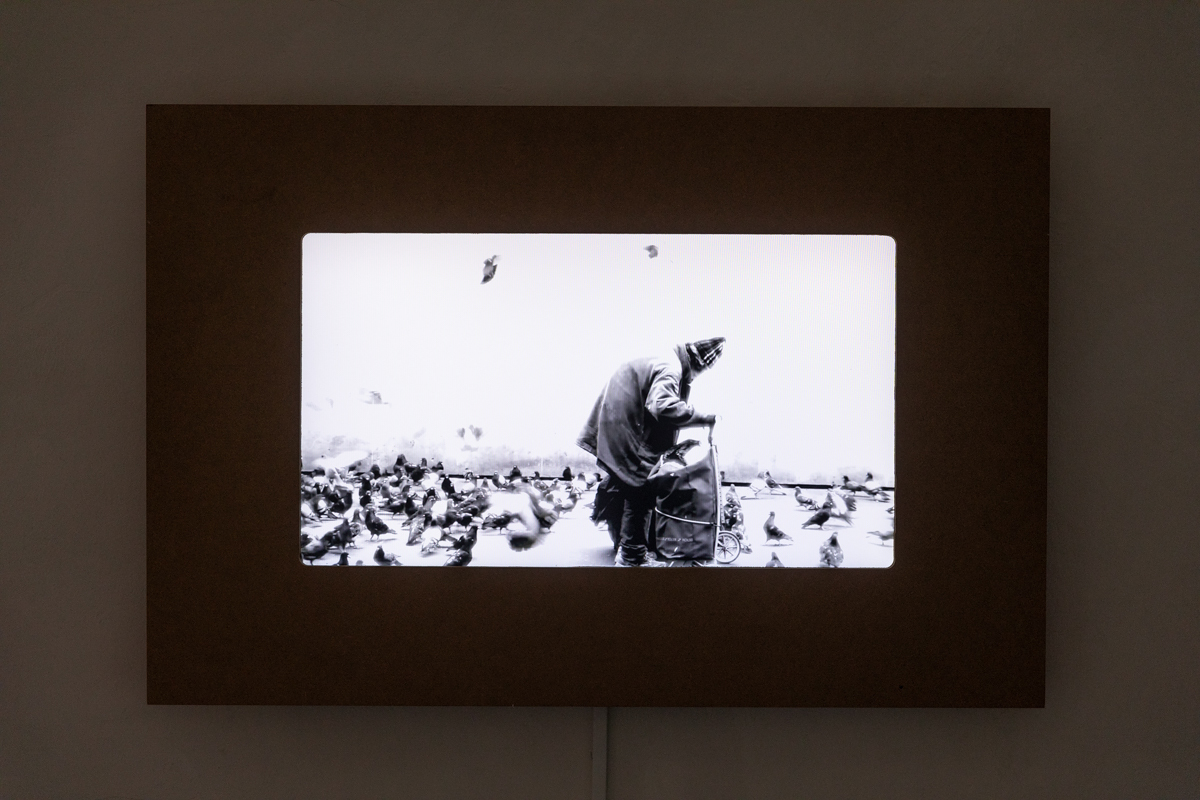
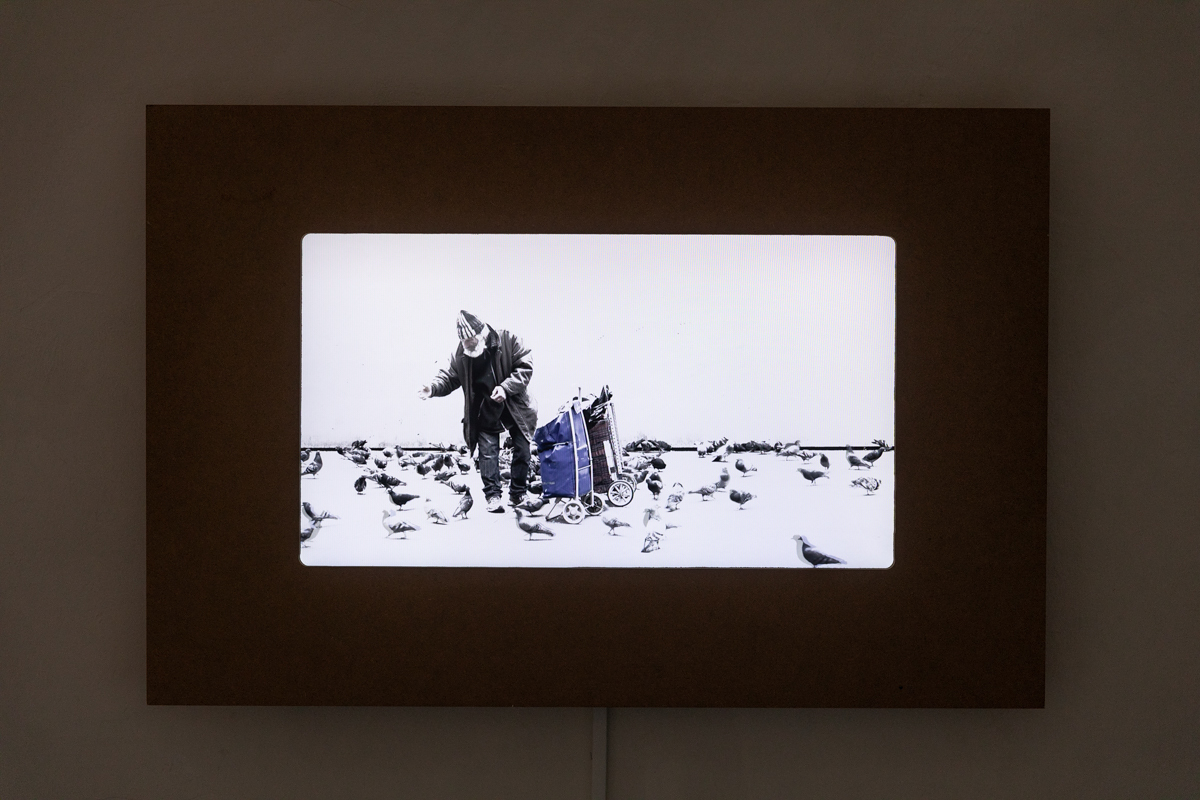
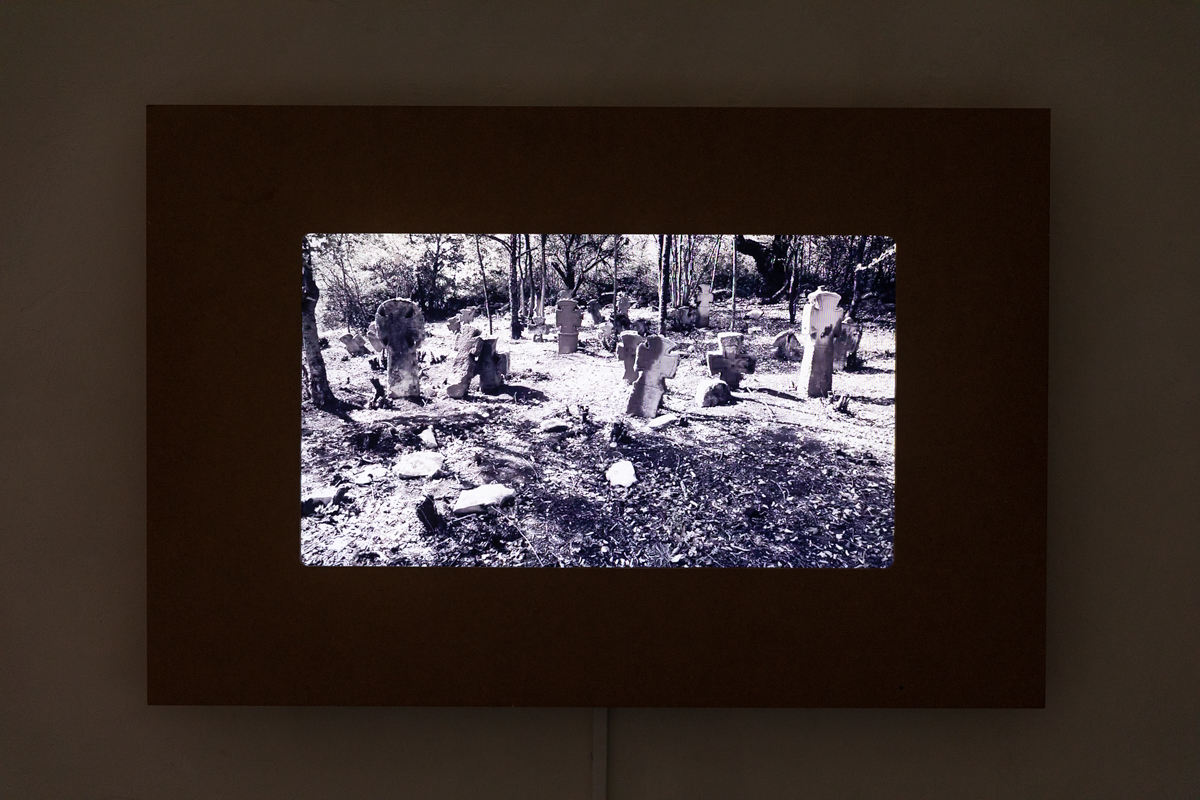
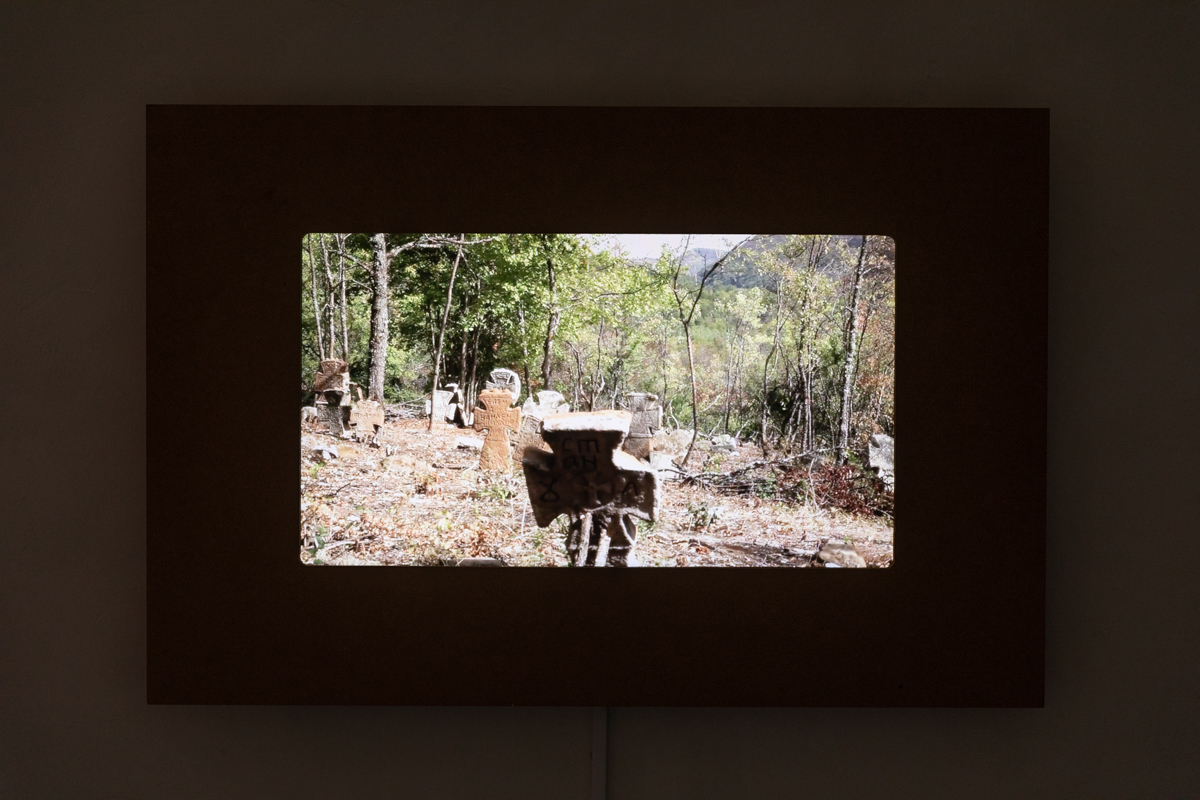
Against this background, the poor want “nothing to do with him, because it is noon, it is the noon of history!” The historical-philosophical impact of this refusal leads to a dark vision of the “end of history”: “At the end of history, the nation in turn will be the central point of reference for identity, even if more and more nations share common economic and political forms of organization."
Anyone who wants to use rationality, reason and thinking as counter-medicine in this dark future vision will be rebuked again by the poor as the skeptic: They express a great reserve against the depth—because they nourish illusions. “The Logos nourishes illusions that create a false depth of false concepts such as justice and equality.” Anyone who believes that the world is just and that people are equal are sitting on false concepts that the Logos creates: But reality let them shatter. Nowhere is the power imbalance between master and subject as savior and rescued more clear than in Robinson Crusoe: “In a little time I began to speak to him; and teach him to speak to me: and first, I let him know that his name should be Friday, which was the day I saved his life: I called him so for the memory of the time. I likewise taught him to say Master; and then let him know that was to be my name. "
The poor also have “a deep aversion to the deep. We know that the surface is deeper than any depth. "
Finally, a sentence from Jesus' Sermon on the Mount is called out to them: "The mystery of the kingdom of God has been given to you, but I speak to others in the form of parables—because they see and yet do not see, because they hear and yet do not hear and understand nothing." (Mt. 13:11).
That sounds like approval and confirmation: “We are happy to point out the simple things—such as pleasure or pain. Let the rich fools pretend to understand the complexities of the truth. We will continue to preach to the birds.”

Valentin Stefanoff: We the poor of this world, 2014, Video, KULTUMdepot Graz, aus: VULGATA. 77 Zugriffe auf die Bibel (2017)
Enjoyment
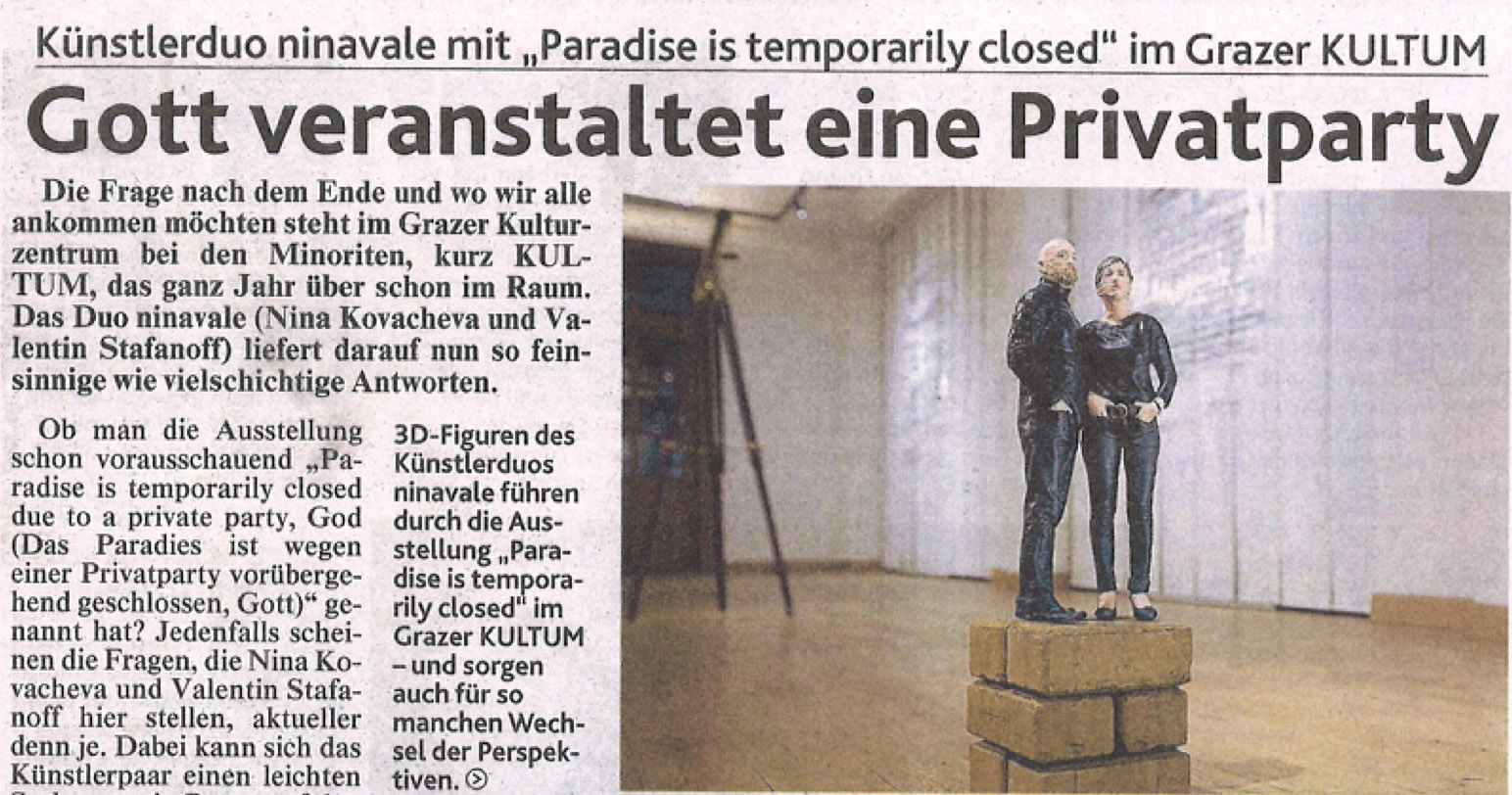
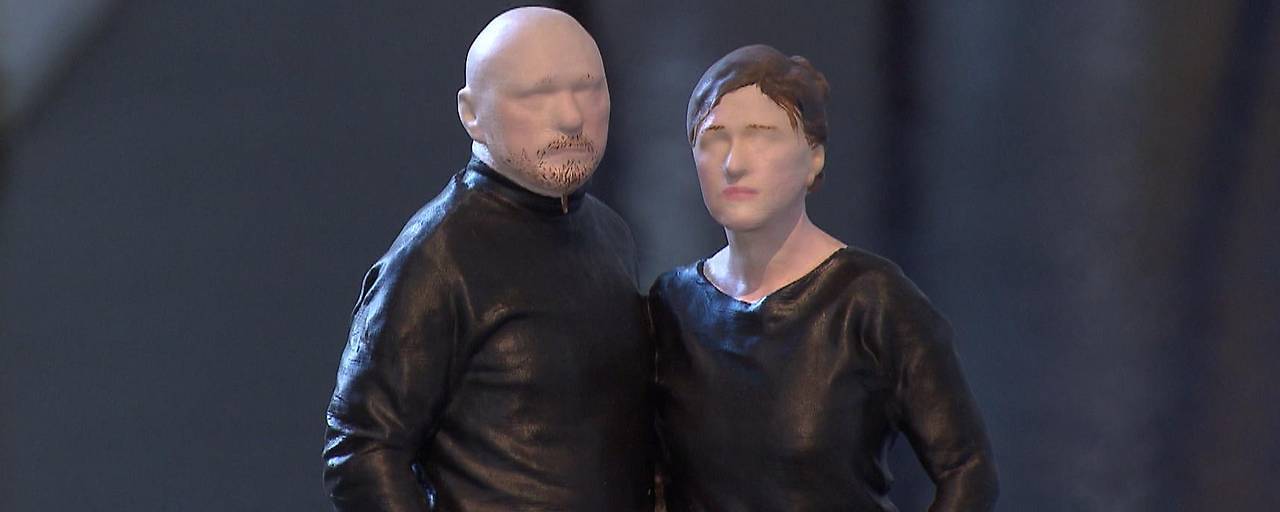
The invitation to a really good life was offered by the artist couple as a “temptation”, which, given the rigid restrictions on freedom in which this exhibition took place, could of course also be read sarcastically. Ninavale, the artist couple, was a participating part of the exhibition, of all things, as a 3D print in the hallway. The invitation to the viewer to look through the large telescope behind it turned them into giants in the search for the joy of life, the letters of which had already illuminated the entrance to the exhibition in cardboard boxes: "enjoyment" can be deciphered in the telescope.
With the sound of such an exhibition beginning, boxes lay on the floor, glowing pink, almost as if the monastery had become a temple of joy. It was also in the middle of the renovation, a few days later they were chiseling and dusting, lines were laid and plastered: the ‘closed party’ was also used here as an opportunity to renovate.
At least as strong as a pink amusement world was the association with shipping boxes containing these letters made of shaped neon tubes. Their light redefined these boxes. Whatever you keep in boxes, stowed away, shipped: This was not just about online shopping, which soon surged again due to the closure of the shops, but also about creating meaning through sounds and emerging language. If you arranged them “correctly”, the word “enjoyment” was formed. Enjoyment, edification, (life) joy. The only place to find paradise, says NINA Kovacheva, is your own inner being.
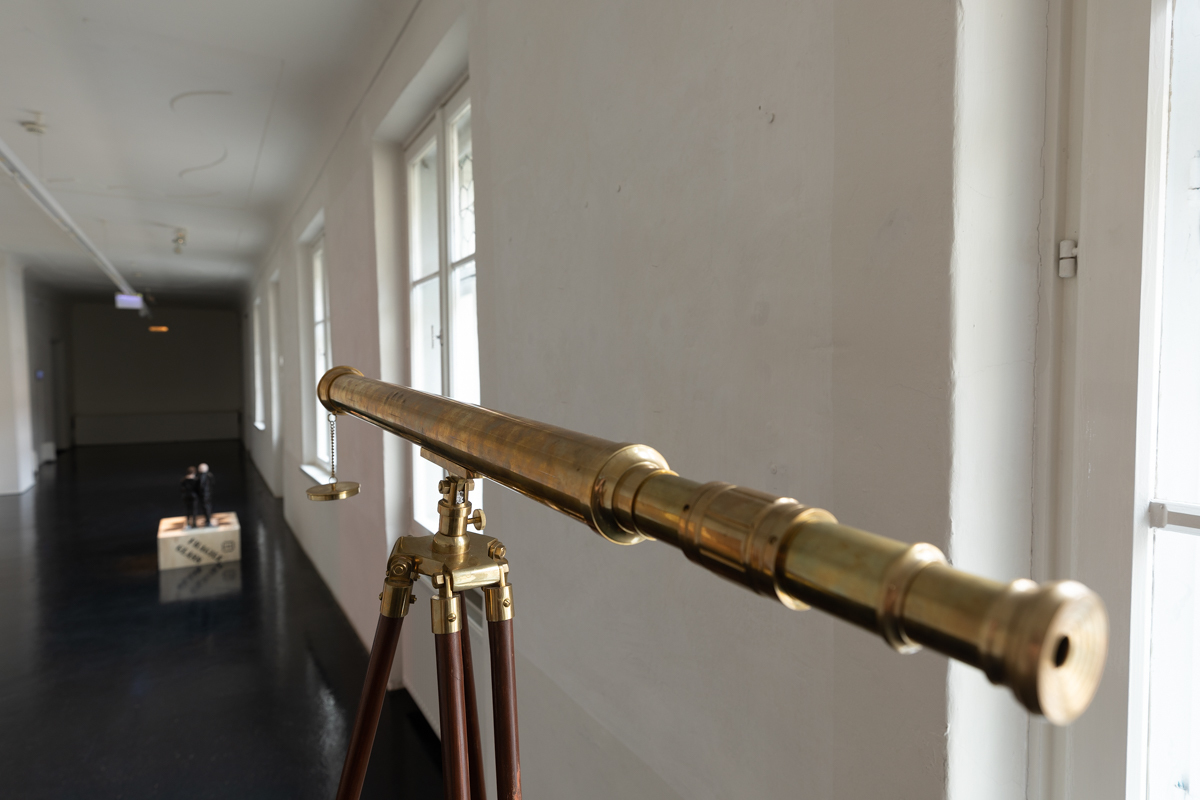
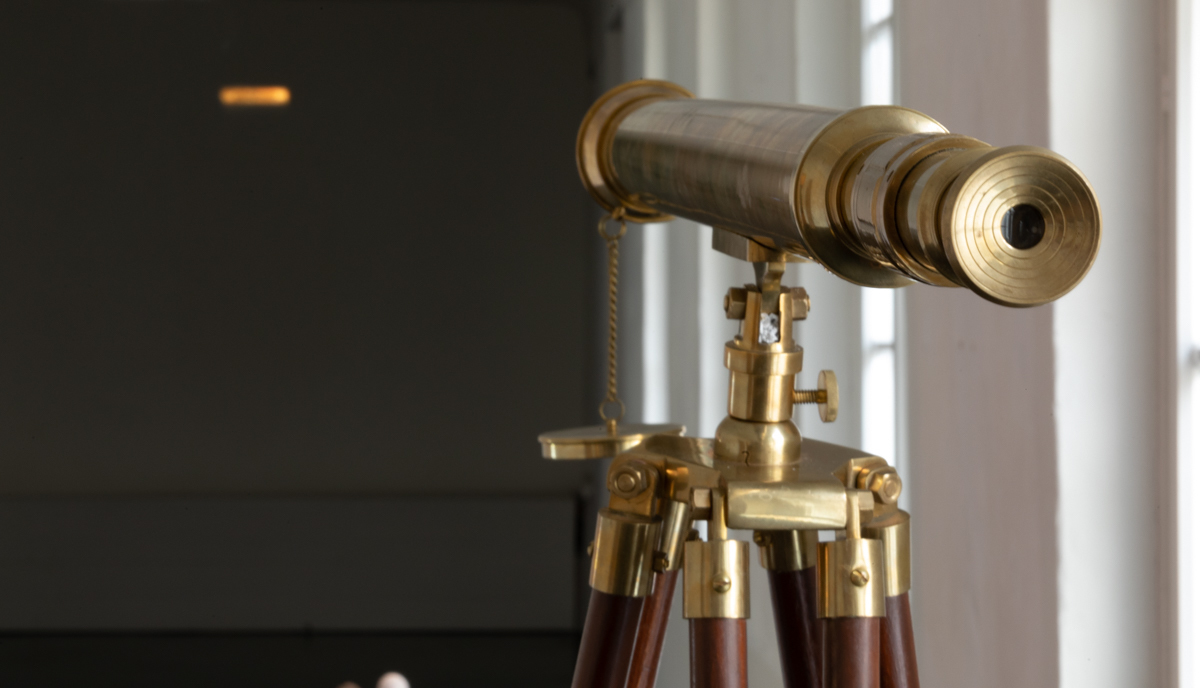
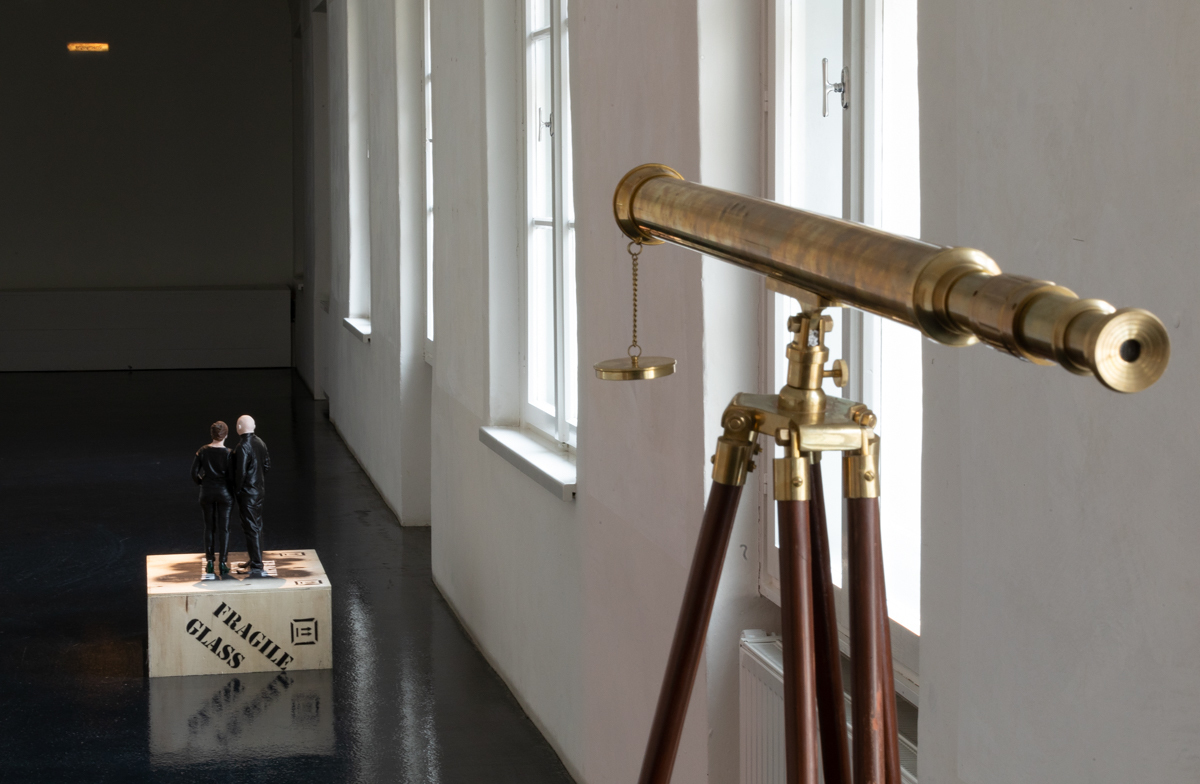
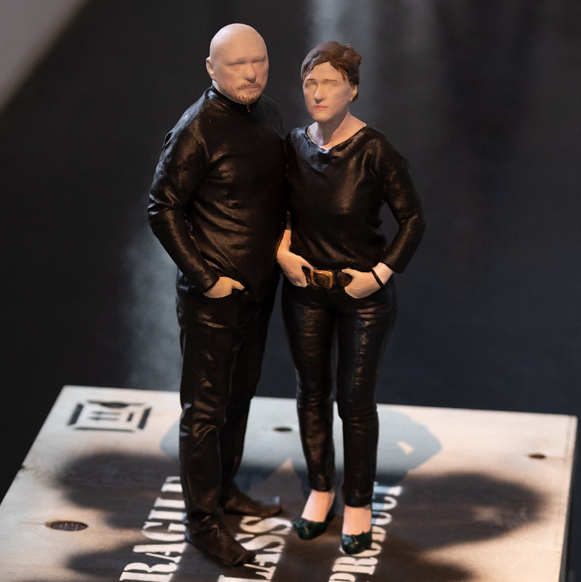
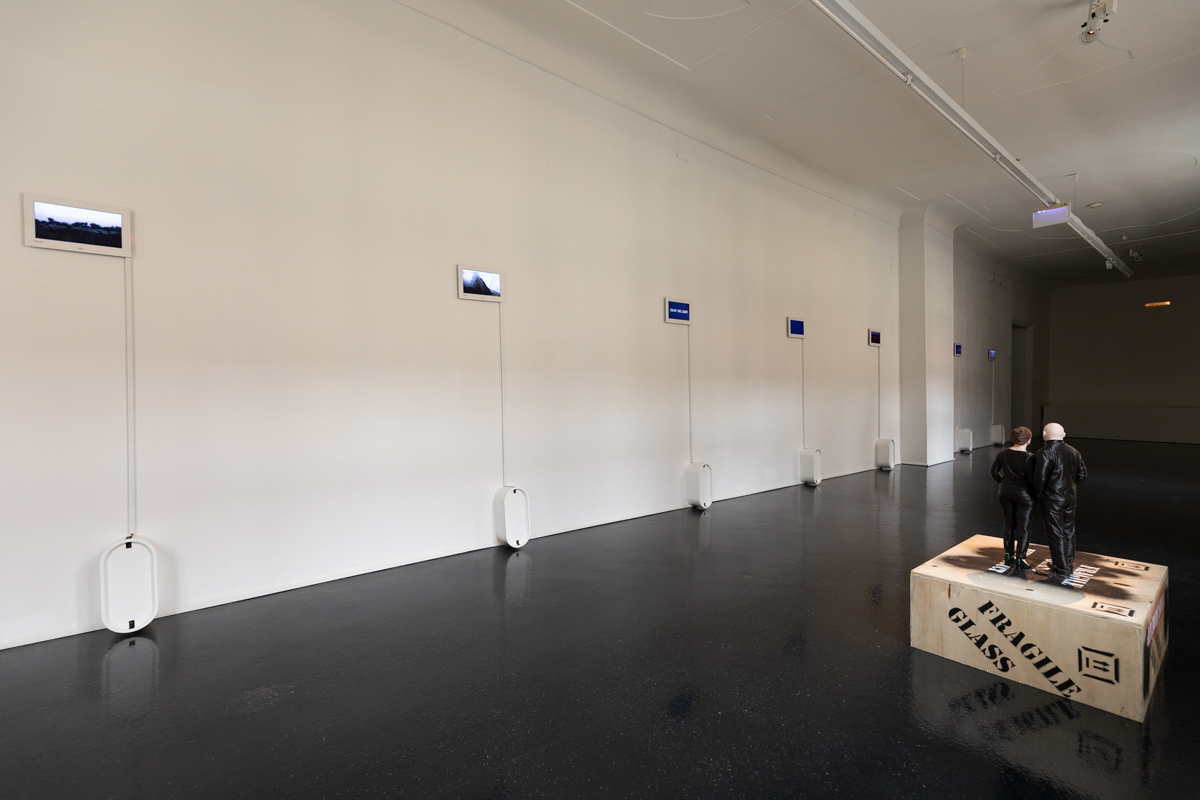
ninavale: The Temptation of ninavale, 2017, 3D-Druck, Fernrohr, Schild, 7 Monitore. KULTUMdepot Graz, aus: ninavale: Paradise is temporarily closed (2020/21)
Precisely this "enjoyment"—does this word imply longing? pleasure? The art of finding delight in life?—was the theme of the second exhibition wing. Before this word was discovered as small brass lettering on the wall, visitors were confronted with a large telescope. In the middle of the corridor, the artist couple stood on the transport box as a small 3D printout. Which meant something like: Ninavale took the viewer into the star gazing. The part of this exhibition was titled “The temptations of ninavale”. So the temptations of both. Temptations not of the snake from Genesis 3, but rather the temptations of joie de vivre and enjoying life. An invitation to temptation for everyone who is part of this exhibition.
This part of the exhibition was a further development of installations that ninavale had shown in the Museum for Contemporary Art in Taipei (Taiwan), in the National Gallery of Macedonia in Skopje and in the Museum for Contemporary Art in Sofia (Bulgaria). It was the “surplus enjoyment” or the “temptations from ninavale” to a “good life” that were originally expanded in the Graz exhibition to include the annual theme of the exhibitions at KULTUM. But then the pandemic arrived and the concept of this show grew with its demands and consequences. Well-known "indicators" of the good life—such as the "pursuit of happiness", securing prosperity, the increase in goods and possessions, the power to achieve and shape something, social and professional recognition—can degenerate to the point of ridicule, when the loss of freedom or health is at stake. In this respect, the pandemic experience formed a completely new foil, on which the exhibition was now read.
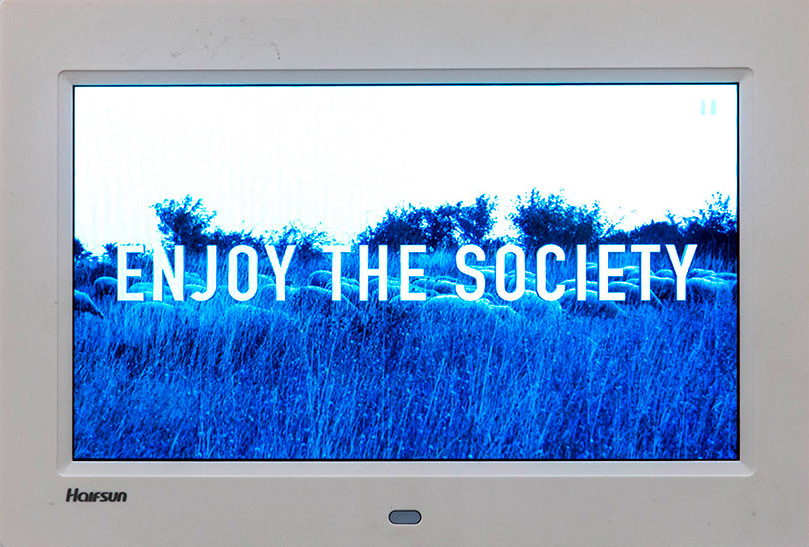
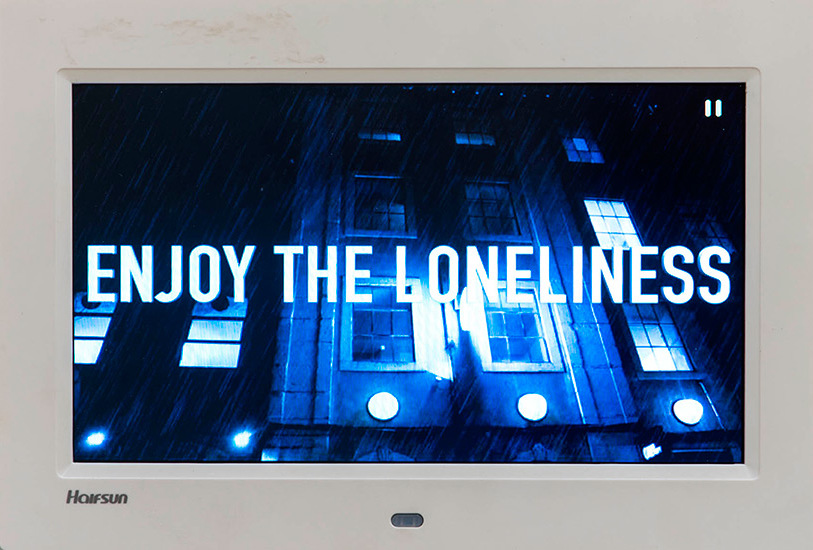
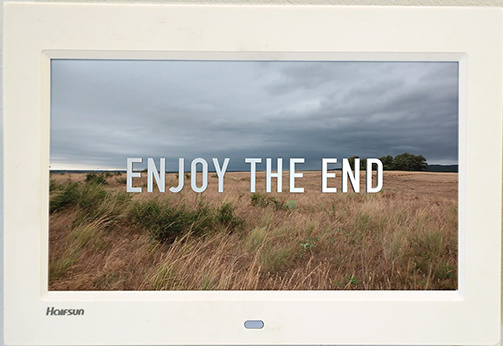
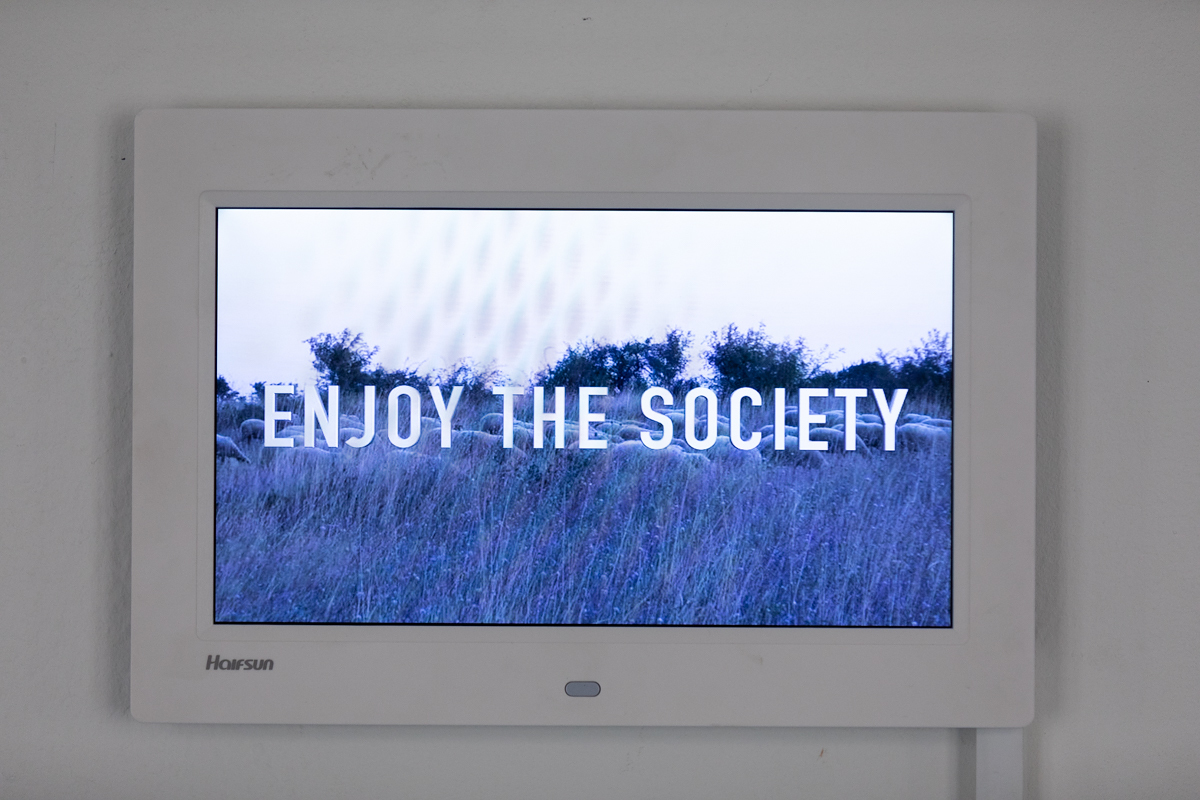
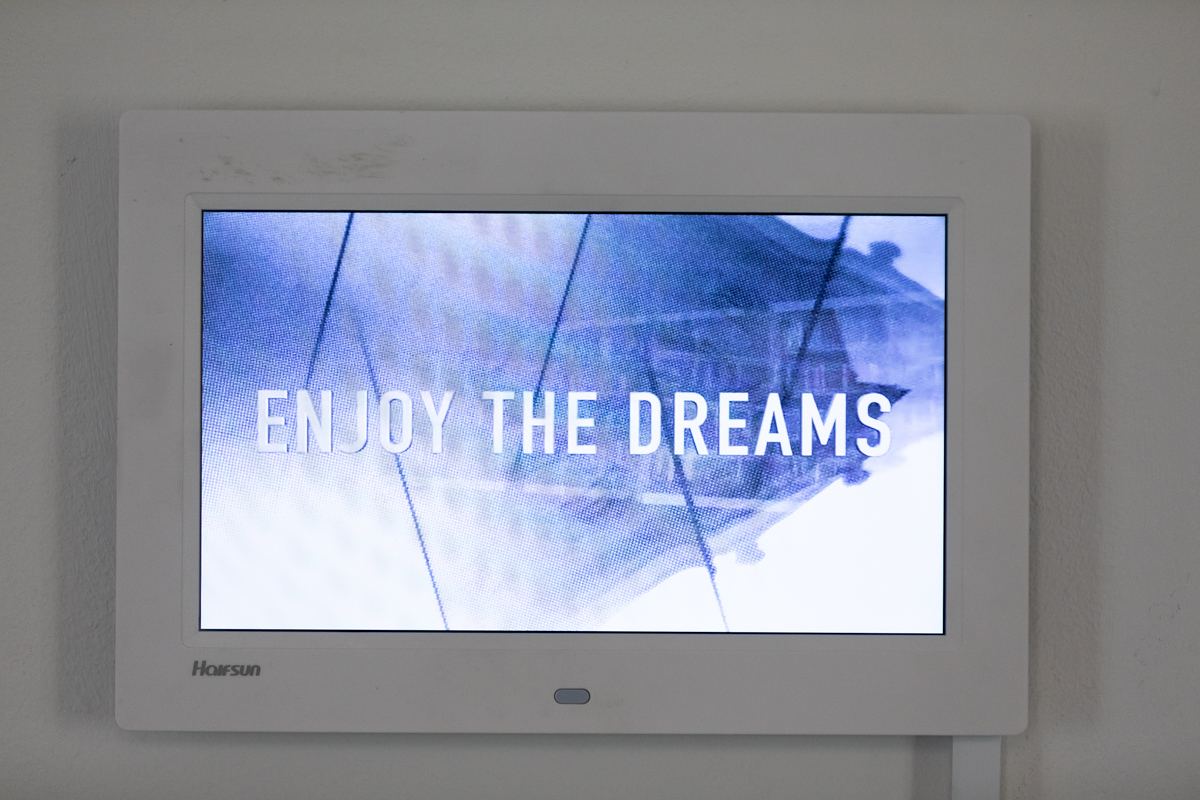
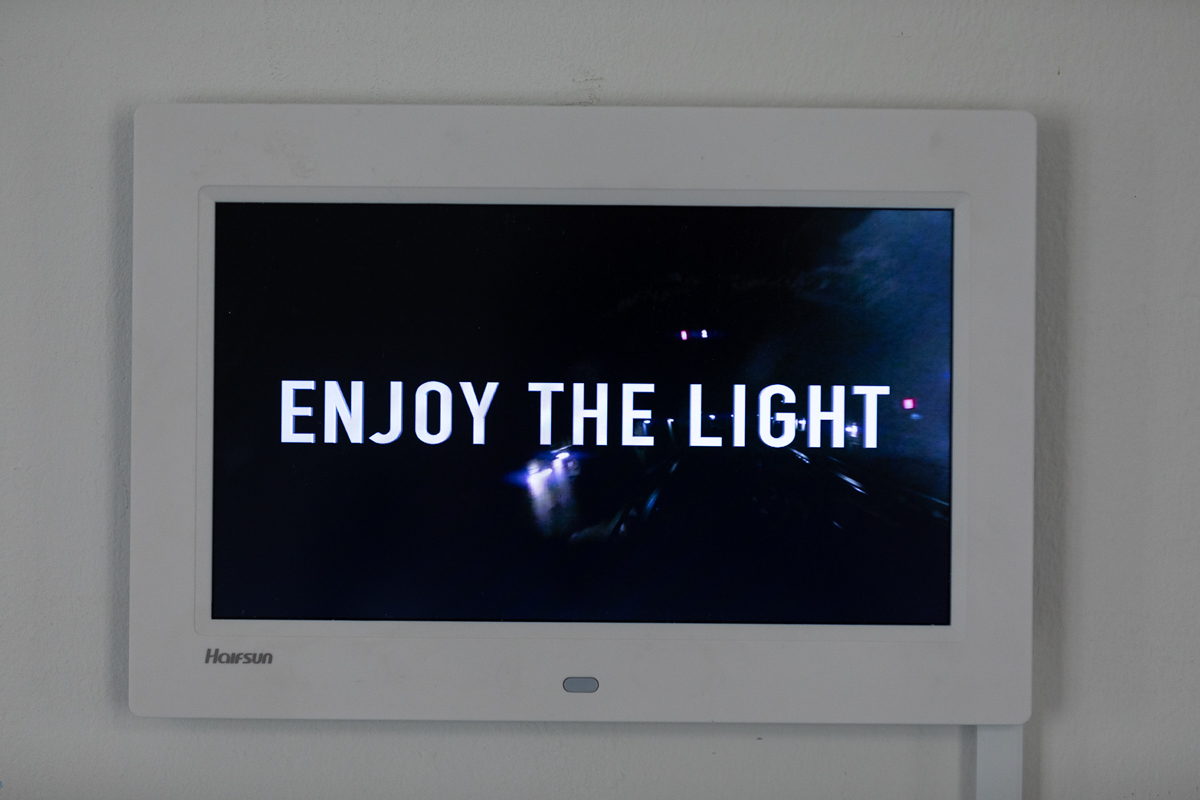
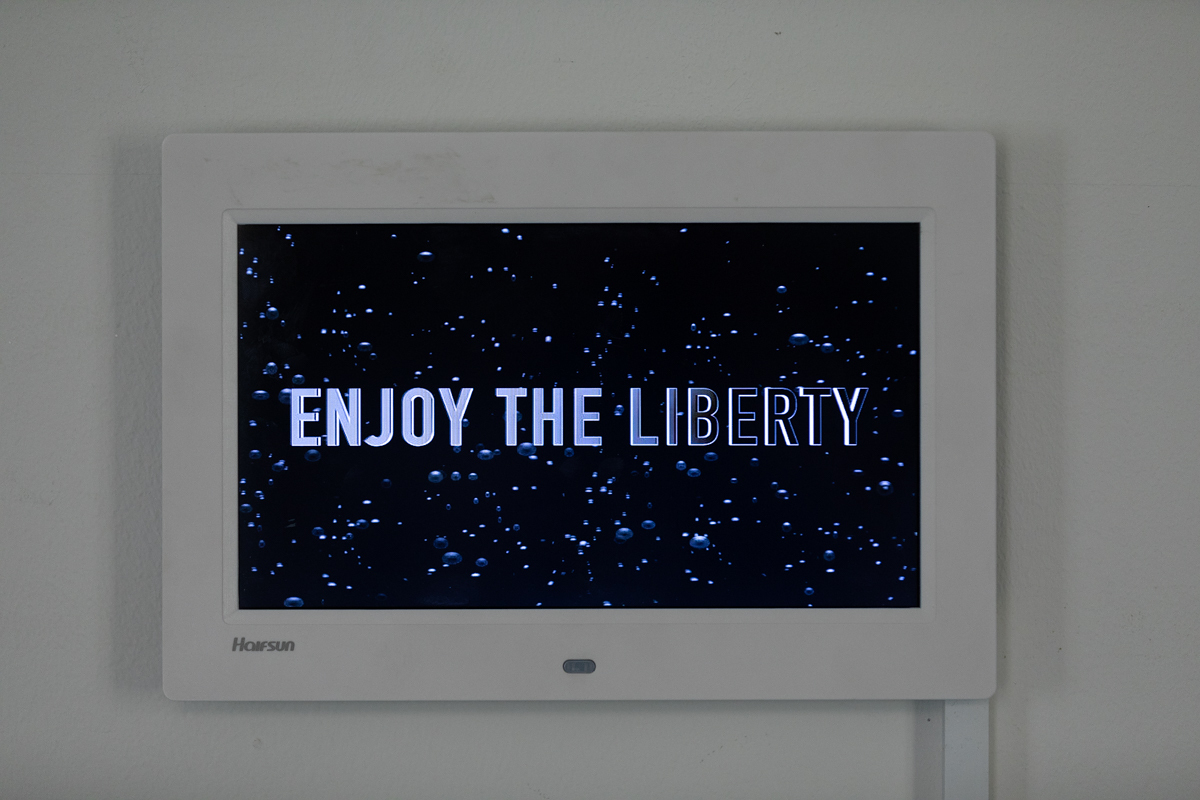
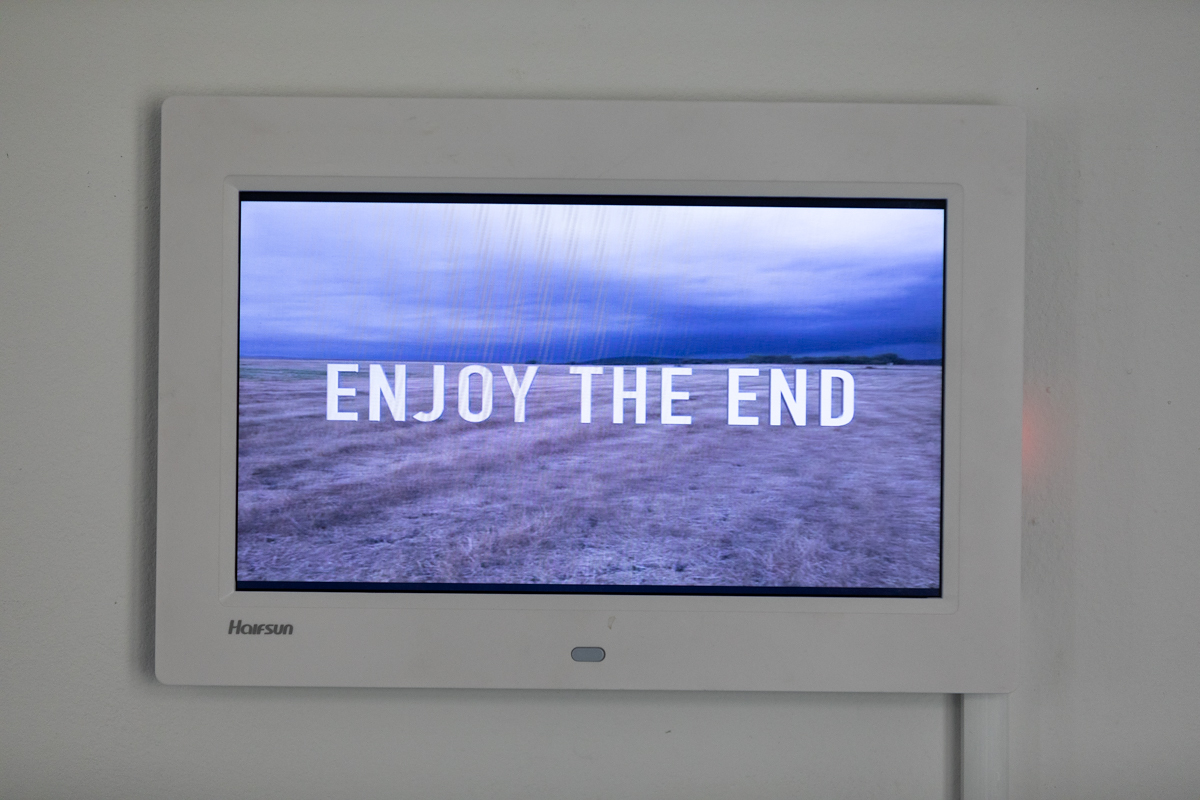
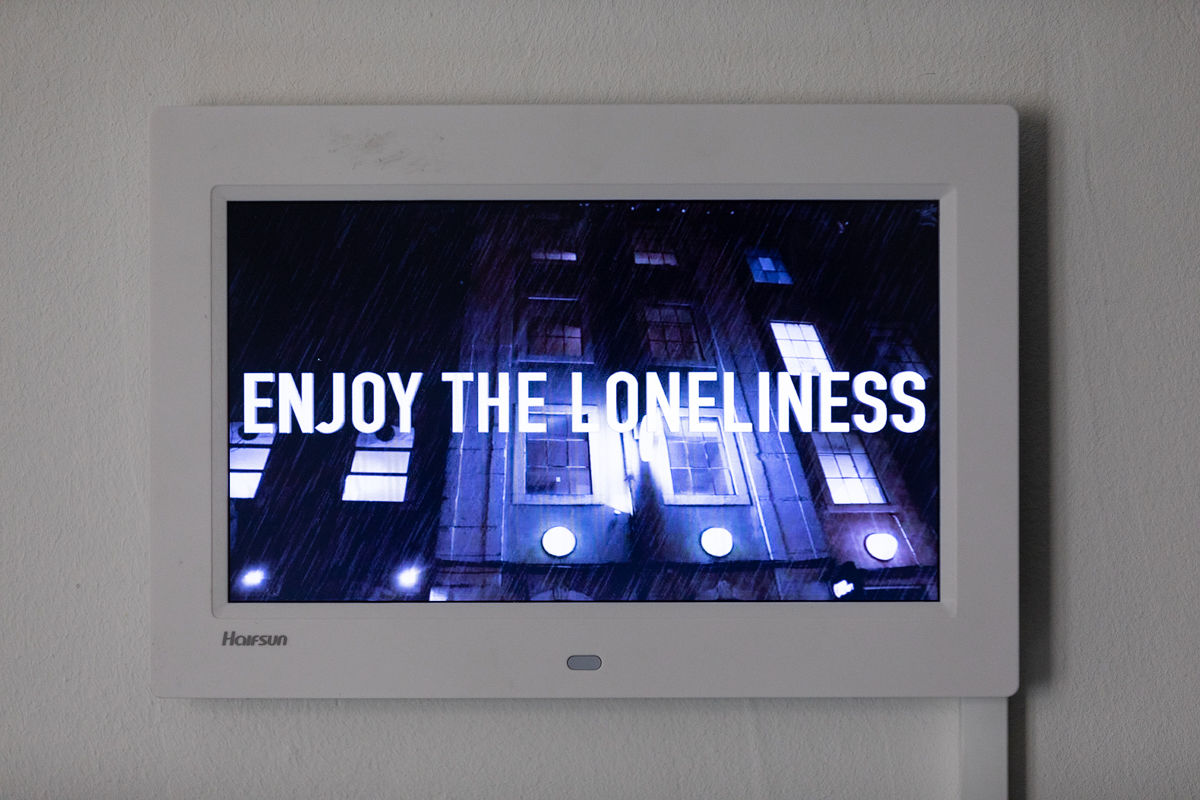
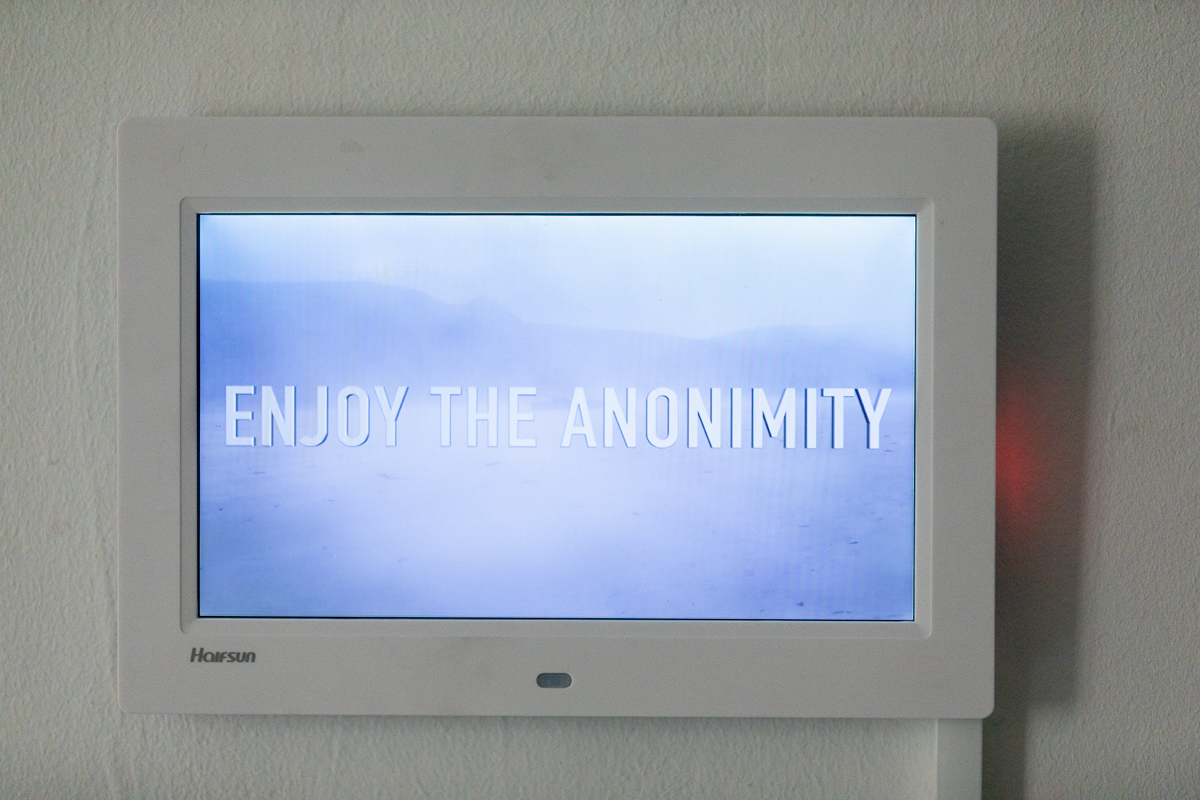
ninavale: the temptations of ninavale, 2017, Installation: Video, Neon, 3D-Objekt, KULTUMdepot Graz, aus: ninavale: Paradise is temporarily closed (2020/21)
What, then, if you do not want to and cannot follow the temptations of ninavale? The request on the small monitors along the corridor with the telescope and the digitally printed artist couple expressed restraint, stoic calm but also insolence, irony and cynicism at the same time. “ENJOY THE SOCIETY! ENJOY THE DREAMS! ENJOY THE LIGHT! ENJOY THE LIBERTY! ENJOY THE END! ENJOY THE LONELINESS! ENJOY THE ANONYMITY”, read the small monitors, on which various landscapes with flocks of sheep, the Paris metro at night, house facades in the rain or wafts of mist were depicted in film miniatures.
Such calls caused fundamental shocks in this collective experience of the corona pandemic: While at the beginning of the 1st lockdown in spring 2020 there were still naive visions of solidarity, balcony concerts, clapping for the systemically important professions, it was noticeably different in the following lockdowns: Overstrained nurses and doctors, overcrowded intensive care units on the verge of collapse. Nobody could or ought to enjoy company any more. Anonymity was also no longer a pleasure, but rather an increasing fate. So was loneliness. The lights of cars in the night disappeared. Personal freedom was deprived in a way that had never been imagined in Western affluent societies. The former pastoral power of the Church was now taken over surprisingly quickly by the secular state. But conspiracy theorists also sprang up, a rational distinction between what is right, true, or false, disappearing fast. The skins of social cohesion gradually began to float away. Loneliness, poverty and existential fears increased. For many, the “good life” was not only dramatically restricted, it was and is at stake.
And yet: at the end of the opening, the artist NINA Kovacheva repeated her request: “Enjoy this life!” “Paradise is in the little things. In little things every day and especially in a simple life. Of course, we also look at ourselves ironically. Us and our human existence. Because if it gets too dramatic, it is no longer interesting.”[5]
The artist couple ninavale did not want this invitation to live, for their joy and enjoyment, to be understood as a cynical criticism of hedonism, although it is, of course, also a reading. Rather, it should be a call for a real search for how life can and should succeed. Even in the lockdown experience of standstill, loneliness, temporary deprivation of liberty and increasing anonymity. NINA Kovacheva and Valentin Stefanoff attach particular importance to the spiritual and also the spiritual dimension, which evokes moments “in which our consciousness is aroused and enlightened, in which we can see clearly and assess our surroundings with appreciation. It is a state that also gives us spiritual stability, an inner view that allows us to react appropriately and reasonably to events flowing into our lives. "[6]
Alone
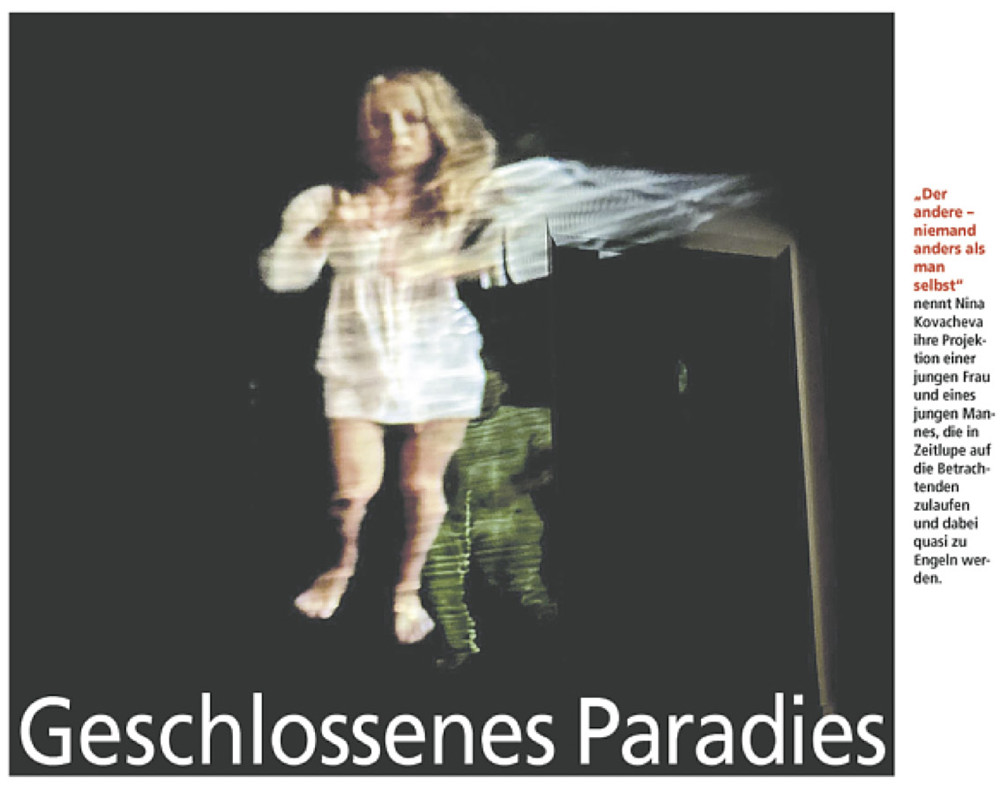
Alone—the other is none other than yourself: Two young people, shot in slow motion while walking, are projected through a large glass vase. The body is caught in it, yes, it becomes, as it were, the “spirit body” on the vase. The curvature of the glass causes a distortion of this young woman and this young man, who sometimes take on angelic features. They run after each other and catch up with each other.
In order to create this state, ninavale always consciously rely on destabilizing sensual experiences and impressions. The last two exhibition rooms were occupied by video installations that were able to translate the “course of life” from start to finish in an astonishingly sensual way. In “Alone—The other is no one other than the self”, two young people were filmed in slow motion while running and projected through a large glass vase. The body was caught in it, indeed it became, as it were, the “spirit body” on the vase. The curvature of the glass caused a distortion of this young woman and this young man on the projection screens, who took on angelic features, once in front of them, once behind, once in front, once in the shadows: if the connection to one another remains in the end only a longing, it is ultimately just a dream? Is the togetherness in reality in the end more than a loss of reality or rather a gain in reality? Or could it be that we can only be at peace with ourselves if we keep breaking up with each other and not staying alone?
Or should we familiarize ourselves with the idea that we are not constantly chasing and chasing each other in our relationships, but that we think dancing closer to one another? Or that the approach to ourselves also takes place in the mode of dance? [7]
Waiting for Someone or Something
A carousel ride becomes a metaphor for waiting in the constant frenzy of life, which begins to spin faster and faster. A pleasure for children whose heart comes to a standstill, contrasted with an EKG Curve that at the end marks the actual stop of the heartbeat: What are we waiting for?
The walking of the two young “spirit bodies” in the anteroom could also be read metaphorically as a “course of life”, which, once read with the mode of remembrance, is also clamped between the beginning and the end, between birth and death. Life takes place between these poles, and sometimes it assumes a destabilizing pace. The viewers were drawn into a carousel by NINA Kovacheva; The opposite of the amusement park made of masks and faces began to turn, the journey was broken by brief interruptions of an ECG curve that appeared over and over again. The world began to turn so fast that it made your heart stop. And in the end, the life carousel revealed that the curve no longer oscillated. That was the end. The eternally recurring waiting for someone became in the end waiting for something indefinite ("Waiting for Someone or Something")—that is death.
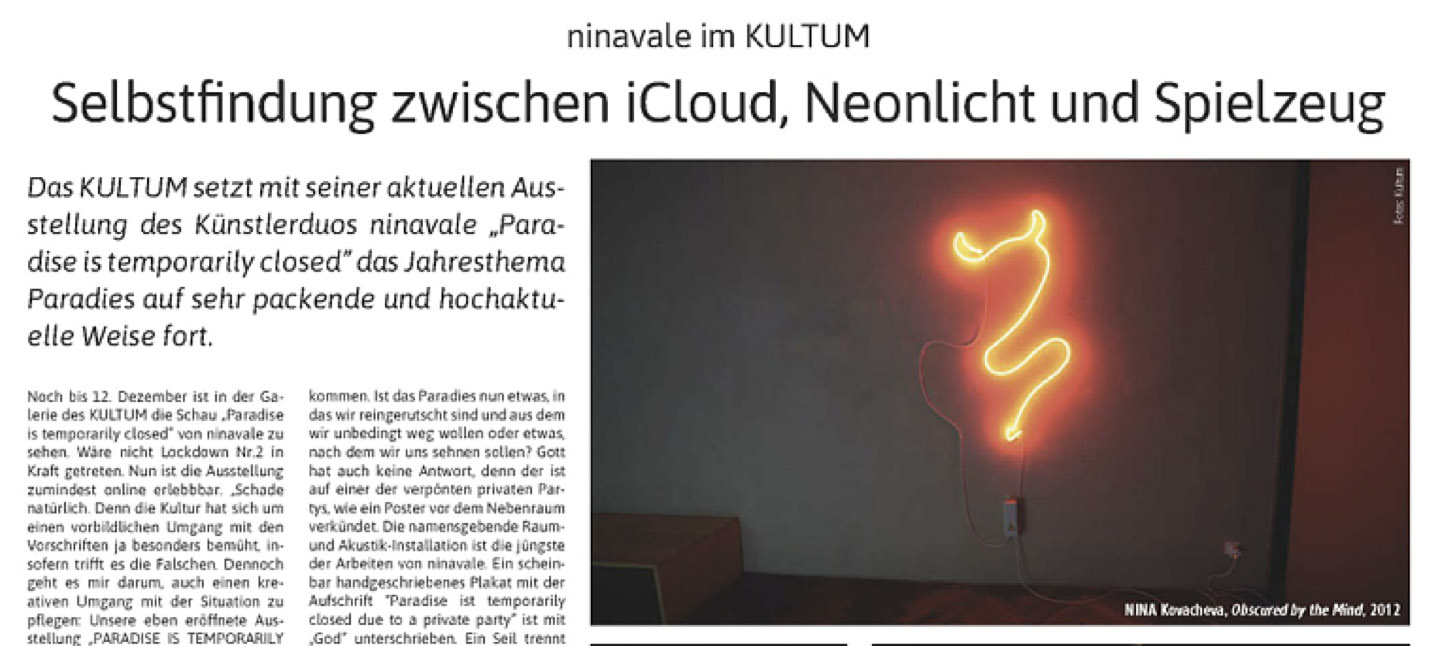
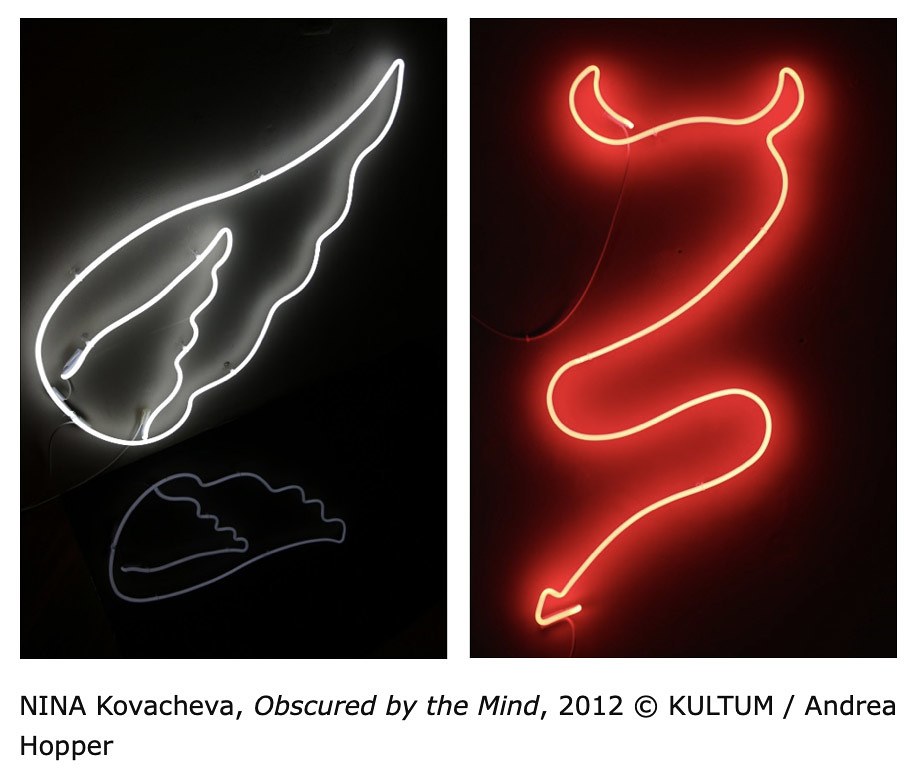
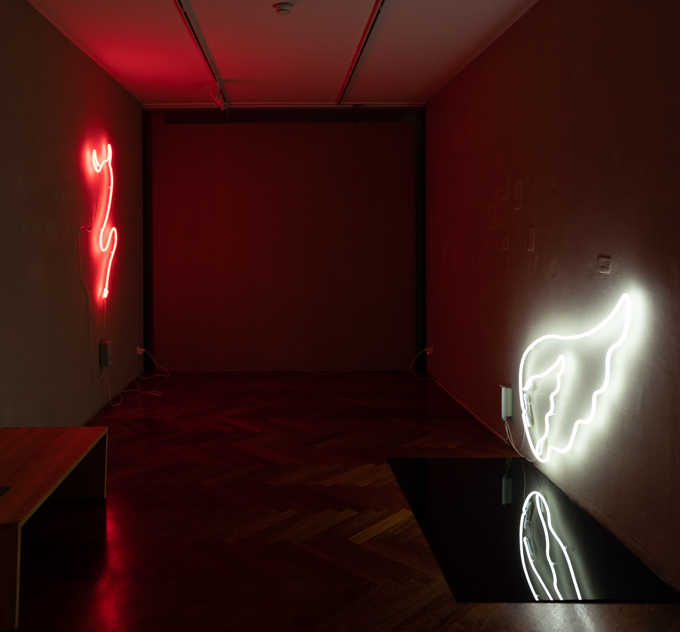
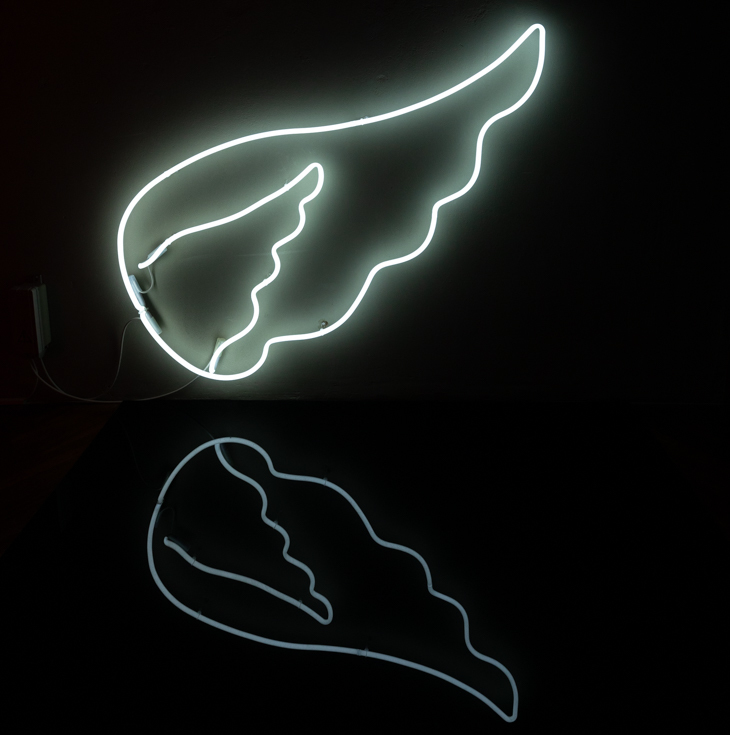
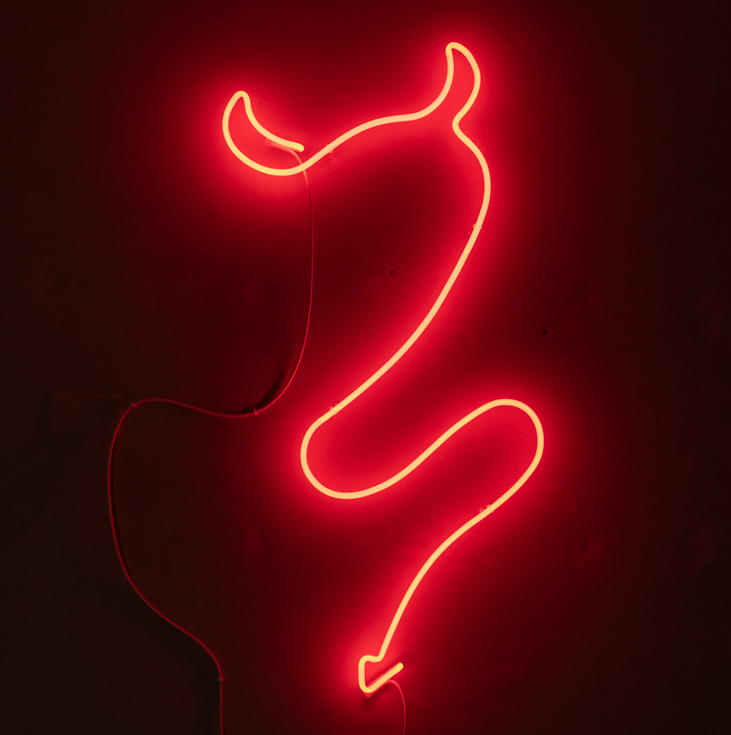
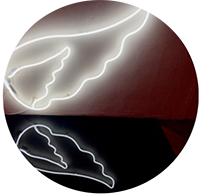
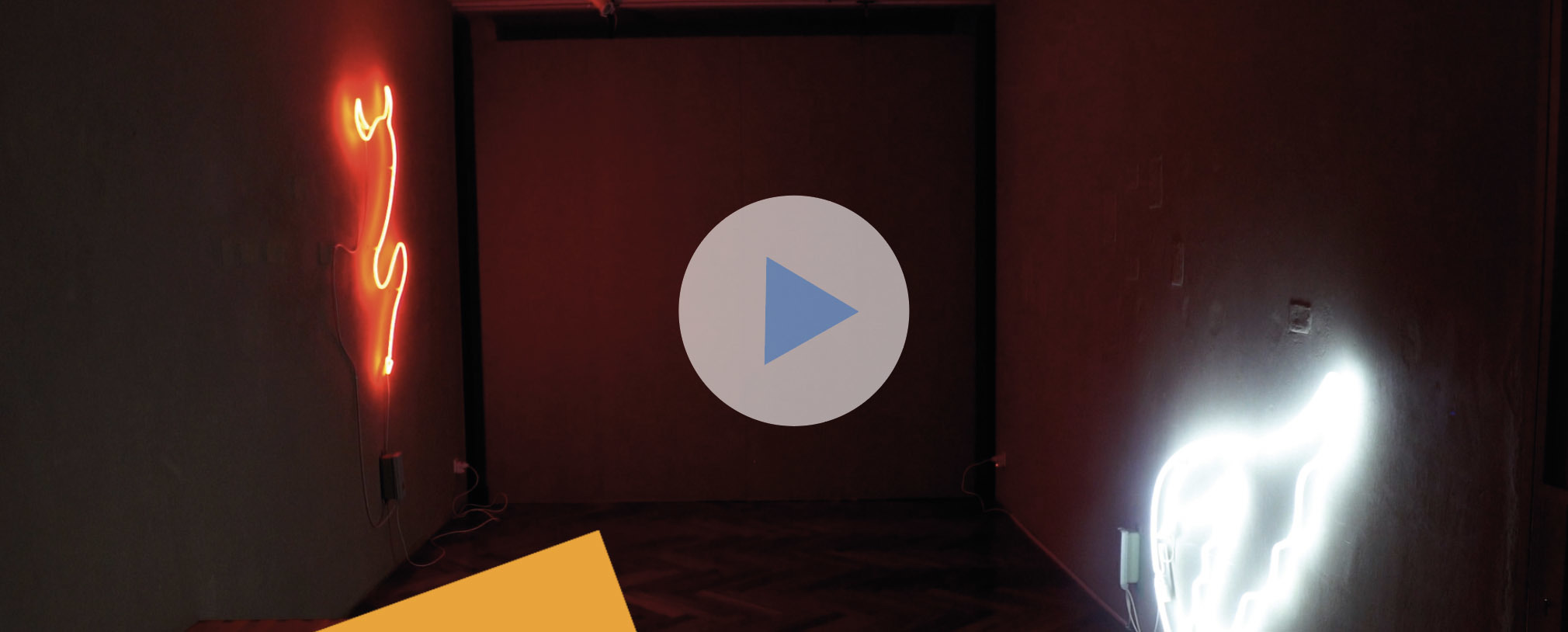
Against this background, the invitation to "enjoyment" deepened once again in a different existential urgency than the current exhibition period with its perils of limitation. “Last things” were finally noticed in the form of neon sculptures on the wall as they walked by: the devil's face and a half real and half mirrored pair of angel wings. "The antagonists stand opposite each other, but just as together remember a happy life—of nocturnal urban light landscapes that promise distraction and the human society that has become so precious and which must now be mercilessly switched off at a certain hour." [8]

NINA Kovacheva: Obscured by the Mind, 2012, Lichtinstallation, Neon, Glas, KULTUMdepot Graz, aus: ninavale: Paradise is temporarily closed (2020/21)
Obscured by the mind
Neon tube drawings of an angel's wing and a devil's face highlight the primordial principles of good and bad, which the snake in the garden of paradise had once promised to recognize and differentiate in bright advertising style. But the title is: Darkened by the Spirit. Or thinking —"OBSCURED BY THE MIND". The silhouette of the emblems also suggests remembering these original principles in times of alternative facts.
Against this background, the invitation to "enjoyment" deepened once again in a different existential urgency than the current exhibition period with its perils of limitation. “Last things” were finally noticed in the form of neon sculptures on the wall as they walked by: the devil's face and a half real and half mirrored pair of angel wings. "The antagonists stand opposite each other, but just as together remember a happy life—of nocturnal urban light landscapes that promise distraction and the human society that has become so precious and which must now be mercilessly switched off at a certain hour." [8]
In this work, NINA Kovacheva also recalled the primordial principles of good and bad, which the snake in the garden of paradise had once promised to recognize and differentiate. But the title was: Darkened by the Spirit. Or thinking—"OBSCURED BY THE MIND". The silhouette of the emblems also made it possible to remember these original principles in times of alternative facts. Because we “currently live lost somewhere between truths and lies” [9], stated Kovacheva and Stefanoff. For them, this impulse to differentiate between good and bad is particularly indicated in the “saturation of society” and in the daily “trivialization of violence” and in the “trivialization of evil” [10].
NINA Kovacheva and Valentin Stefanoff have repeatedly and impressively shown such questions in their major museum exhibitions worldwide (from France and Great Britain to Hungary, Bulgaria, Macedonia, to China and Taiwan), also in individual positions. Both artists already had some works in the KULTUMdepot Graz. Thanks in part to the courtesy of the artist couple, it has now been possible to acquire the entire exhibition for the KULTUM collection. It is thus also a cultural memory store of a situation that is so historic for the entire world and its artistic approach. In addition, it continues the basic question of the museum, which is set up in ten virtual rooms, how religion is reflected in art at the beginning of the 21st century[11]. Of course, their final location has not yet been decided. "Truths have to be robust" (Room 1), "Happiness is without mercy" (Room 8), "Nothing is out of the question" (Room 10), for example, are available in the narrower sense of the word!
NINA Kovacheva: Obscured by the Mind, 2012, Neon-Objekte. KULTUMdepot Graz, aus: ninavale: Paradise is temporarily closed (2020/21)
Johannes Rauchenberger
ORF 2 – Orientierung, 6. 12. 2020: Gestaltung: Christian Rathner
Kurator: Johannes Rauchenberger
Kurz vor dem zweiten Lockdown hat "ORF – Steiermark Heute" am 1. November noch einen schönen Fernsehbeitrag gesendet:
Fotos von der Ausstellungseröffnung:
24. Oktober, 11 Uhr
in Anwesenheit des Künstlerpaares
Einführung in die Ausstellung durch Kurator Johannes Rauchenberger bei der Eröffnung am 24. Oktober 2020
Kuratorenführungen: SA, 7. NOV. / 14. NOV. : jeweils ONLINE auf www.facebook.com/kultumgraz

Fotos vom Ausstellungsaufbau
Ausstellungsansichten
Mini-Führungen mit Kurator Johannes Rauchenberger
Stiegenaufgang: ninavale: Enjoyment, 2017, neun Neon-Objekte
Valentin Stefanoff: We the Poor of this World, 2014, Video
Gang West: ninavale: The Temptation of ninavale, 2017, 3D-Druck, Fernrohr, Schild, 7 Monitore
Raum 01: NINA Kovacheva: Obscured by the Mind, 2012, Neon-Objekte
Raum 02: ninavale: Alone, version 2020, Glas, Video
Cubus: NINA Kovacheva: Waiting for Someone or Something, 2013, Video
Gang Süd: NINA Kovacheva: Adam & Eve, Five Biblical Stories, 2012, Foto
Zelle 01: ninavale: iHeaven, 2020, Bildschirm, Neon
Zelle 02–04: Paradise is temporarily closed, 2020, Rauminstallation: VIdeo, 2 Akustikräume, Engelsflügel, Monitor, Verkehrsschild
ninavale: Road to Paradise, 2020, Verkehrsschild, Papier, Sound-Installation
ninavale (NINA Kovacheva & Valentin Stefanoff)
NINA Kovacheva, geboren 1960, Valentin Stefanoff, 1959 in Sofia, Bulgarien. Studium an der Nationalen Kunstakademie in Sofia, leben und arbeiten seit 1994 in Paris. Ihre Arbeiten der Video-, Installations- und Objektkunst, Fotografie und Malerei wurden in großen Museen weltweit in Einzelausstellungen gezeigt. Ihr Werk ist u.a. in bedeutenden Sammlungen vertreten, zuletzt im Victoria und Albert Museum in London. Als Künstlerpaar formt es unter der Vereinigung ‚ninavale‘ auch eine gemeinsame künstlerische Identität. Die Ausstellung im KULTUM ist eine Weiterentwicklung von Installationen, die ninavale im Museum for Contemporary Art in Taipeh, in der Nationalgalerie von Mazedonien in Skopje und im Museum for Contemporary Art in Sofia gezeigt hat. 2002 wurden Kovacheva und Stefanoff von der UNESCO mit dem ‚Prize for the Promotion of The Arts‘ ausgezeichnet. Sie sind mit mehreren Werken auch in der Sammlung des KULTUMdepots Graz vertreten.
www.ninavale.com